
Reviewed · ERAWAN WATERFALL TOURS
Samut Prakan: The Erawan Museum Admission Ticket (NON THAI)
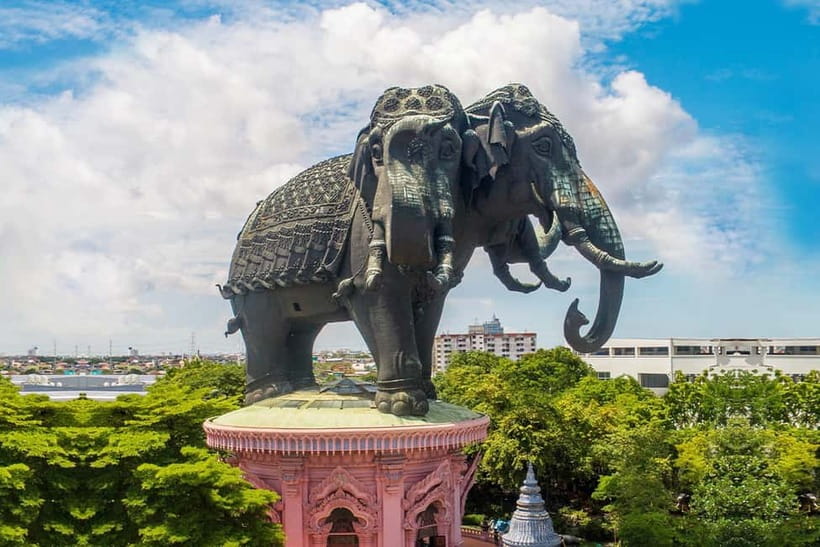
The Erawan Museum makes its point before you reach the galleries: a giant three-headed bronze elephant rises above the building, inspired by Airavata, the mythic mount of the god Indra. Inside, the museum divides its story into three realms, Underworld, Earth, and Heaven, so the visit is as much about symbolism as it is about looking at objects.
I like two things here: the elephant’s unusual scale and meaning, and the chance to see the private collection that Lek Viriyapant hoped to preserve for future generations. The included flowers, incense, and lotus flower add a small ritual element to a visit that might otherwise be only about taking photos.
One practical point: this is an admission ticket, not a guided tour or a ride from central Bangkok. The eight-hour validity refers to the ticket window, not a stated eight-hour museum visit, and you’ll need to follow the modest-dress rules.
Key points to know
- The elephant is the main event: The bronze sculpture draws on the Airavata legend and symbolizes protection of the earth and the sacred objects inside.
- Three realms shape the visit: The museum’s sections are called Underworld, Earth, and Heaven.
- The collection has a purpose: Lek Viriyapant built the museum to preserve antiques and sacred objects for future generations.
- The BTS makes access practical: Get off at Chang Erawan Station, Exit 2, for the free daily shuttle tuk-tuk.
- Bring a camera, dress respectfully: Photos are welcome for personal use, but commercial photography and video are not permitted inside.
- The ticket costs $12 per person: It includes admission, flowers, incense, a lotus flower, and access to areas surrounding the museum, but not transportation.
The three-headed elephant sets the tone
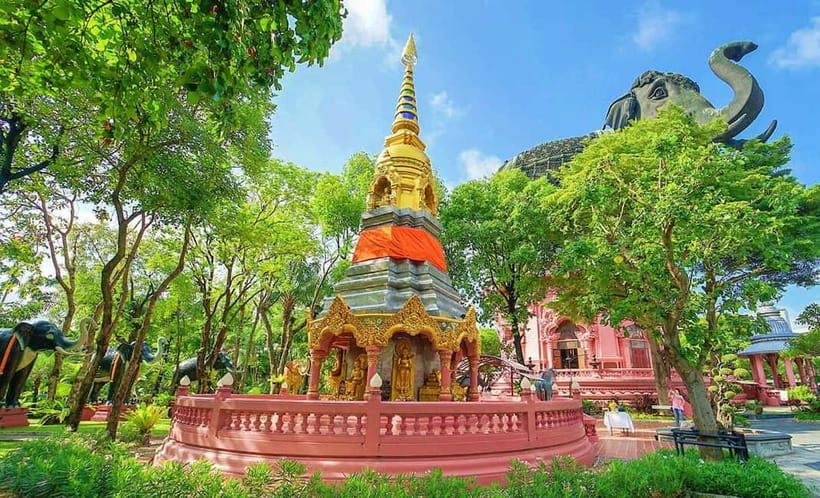
The Erawan Museum’s defining feature is its immense bronze elephant with three heads. Its form comes from Airavata, a figure in Hindu mythology and the vehicle of the god Indra. The sculpture is more than an oversized ornament: it gives the museum a clear theme before you have even stepped inside.
The elephant stands on a sphere designed to represent the globe. In the museum’s symbolism, the figure protects the earth and the sacred objects within. That idea links the building’s striking exterior to its purpose: preserving objects that Lek Viriyapant believed carried cultural and spiritual value.
I’d give yourself time to look at the exterior before heading in. The ticket allows access to areas surrounding the museum, and the setting offers plenty of photo opportunities. The sculpture is the obvious subject, but it also helps you understand why the museum was built in this form. The building and collection are meant to work together, rather than feel like an ordinary display space topped with a dramatic statue.
The appeal is visual, but the story adds something useful. If you know only that the museum contains a giant elephant, you may read it as spectacle. Knowing that the elephant represents protection, and that the museum was created to safeguard a collection, gives the scale a purpose.
More Erawan trips around Bangkok:
- From Bangkok: Erawan Park & Kanchanaburi Small-Group Tour
★ 4.5 · 1,582 reviews - Erawan Waterfalls and Bridge Over River Kwai Tour from Bangkok
★ 4.5 · 372 reviews - Erawan Waterfall and Elephant Care: Private Tour to Kanchanabur
★ 5.0 · 339 reviews
Three realms, one museum
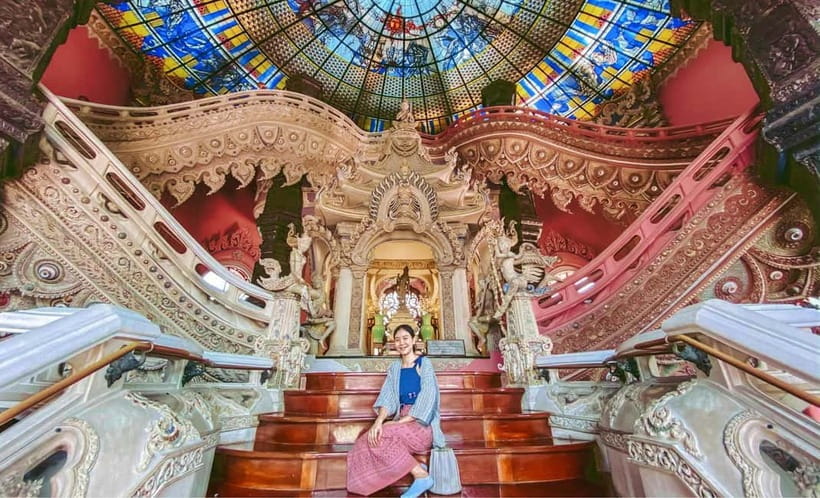
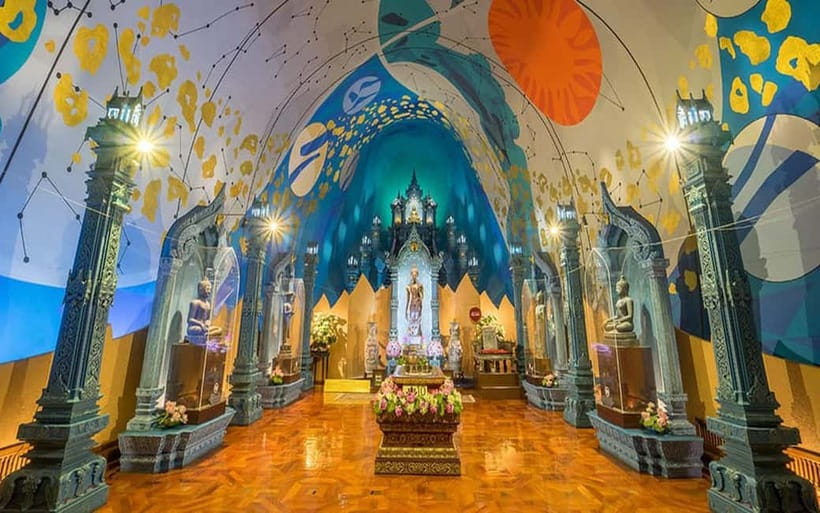
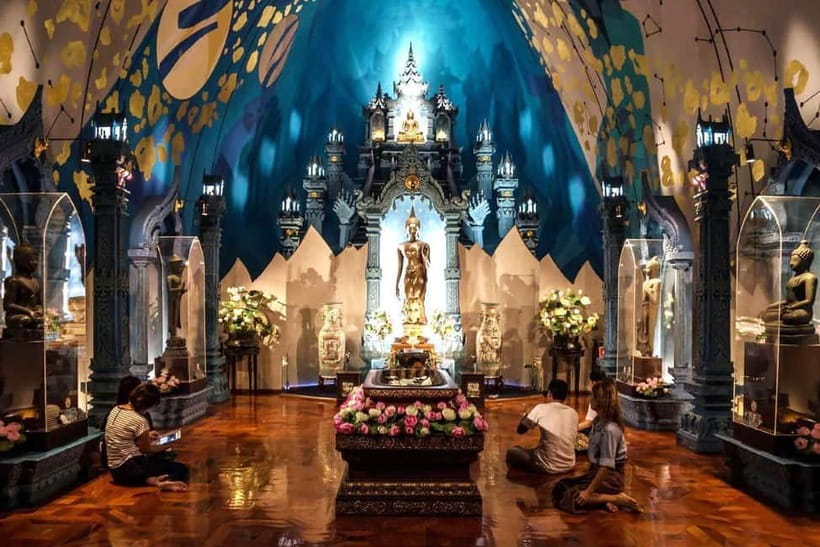
Inside, the museum is divided into the Underworld, Earth, and Heaven. These names give the visit a symbolic framework rather than a straightforward sequence of historical periods. The available information does not spell out the specific objects or displays in each section, so it’s best not to arrive expecting a detailed guide to every exhibit.
Instead, think of the three realms as a way into the museum’s larger ideas. The building brings together Thai cultural heritage, spiritual beliefs, and the private collection of an antique collector. The objects include sacred pieces and works that can be dated to ancient times. People once believed that such objects could bring blessings and prosperity to their land, a belief that helps explain why Lek wanted them kept together and protected.
The three-part structure also gives you an easy way to organize your visit. You can pay attention to how each realm contributes to the whole, rather than treating the museum as a room-by-room checklist. The elephant’s position above the building, the globe beneath it, and the collection inside all belong to the same symbolic idea of guardianship.
You won’t find a named guide or a guided tour included with this admission. If detailed interpretation matters to you, prepare a little before arriving and read the displays carefully. If you’re happy to take in the architecture, symbolism, and objects at your own pace, the ticket suits that style well.
A collection built for the next generation
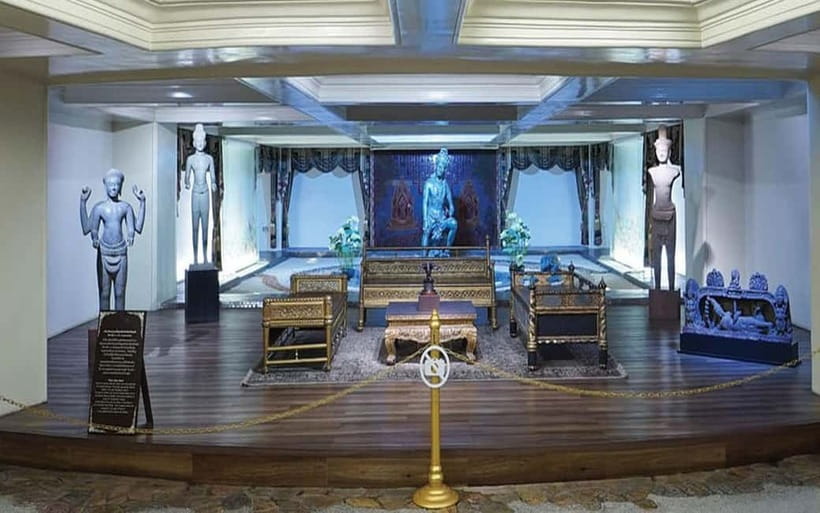
Lek Viriyapant was a well-known antique collector who wanted to preserve his collection as a heritage for future generations. The museum was his answer to a practical question: how could precious objects, including sacred items, be kept together and passed on rather than scattered or lost?
He developed the design, then handed the blueprint to his son, Pagpean Viriyapant, for construction. Both father and son died before the museum was finished. Their family continued the project, carrying out Lek’s wish to create a place that would celebrate Thai culture and preserve the collection in his memory.
That history changes how the museum reads. It is not simply a building assembled to house old objects. It reflects one family’s effort to complete a long-term cultural project, and the story makes the collection’s preservation feel personal. The museum also has a devotional aspect: people came to worship the large symbol and sacred objects even before construction was complete.
The objects’ spiritual meaning is worth keeping in mind, especially if you’re mainly drawn to photography. The museum’s appeal includes its visual scale, but the collection was gathered with care and reverence. Quiet, respectful behavior is requested, and that is a good fit for a place with both cultural and religious significance.
What the $12 ticket includes
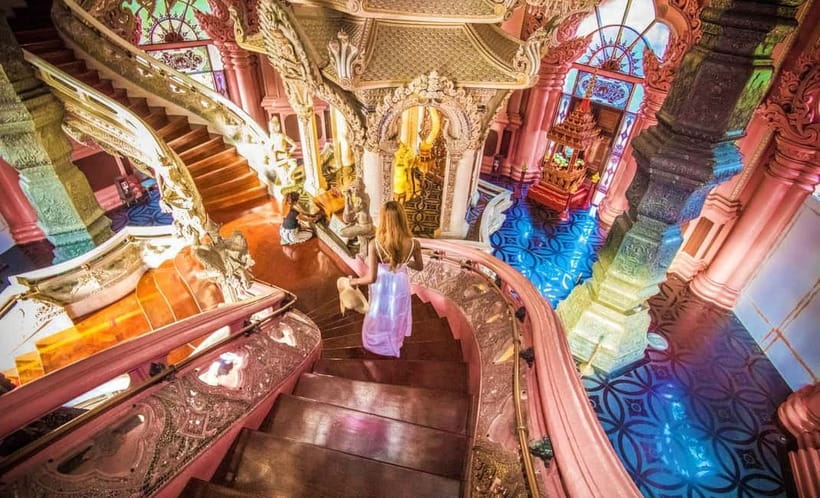
At $12 per person, the ticket is a fairly direct purchase: admission to the museum, flowers, incense, a lotus flower, access to areas surrounding the museum, and taxes and fees. It also offers skip-the-ticket-line entry. That can make the arrival simpler, though it does not change the fact that you need to plan your own trip there.
The included flowers, incense, and lotus flower are a distinctive touch. They connect the visit to the museum’s sacred objects and devotional atmosphere. The information does not specify how or where to use them, so follow any instructions provided on site rather than assuming there is a particular ceremony or ritual.
Value depends on what you want from the stop. If you appreciate unusual architecture, large-scale sculpture, cultural symbolism, and photo opportunities, the admission price covers several kinds of interest in one place. If your main goal is a guided history lesson, this ticket does not promise a guide, and you may prefer to pair your visit with your own reading.
The ticket is for non-Thai visitors and is valid for eight hours. That does not mean the museum visit itself takes eight hours; no visit length is specified. You must visit on the date and time selected when booking, so check your plans before you reserve.
More attraction tickets around Bangkok:
- Bangkok: Muay Thai Boxing Tickets at Rajadamnern Stadium
★ 4.9 · 4,740 reviews - Bangkok: Mahanakhon SkyWalk Entry Ticket with Options
★ 4.6 · 4,094 reviews - Bangkok: Chao Phraya Princess Dinner Cruise Ticket
★ 4.2 · 793 reviews - Bangkok: Grand Palace Skip-the-Line Entry Ticket
★ 4.2 · 720 reviews
Getting there by BTS and shuttle tuk-tuk
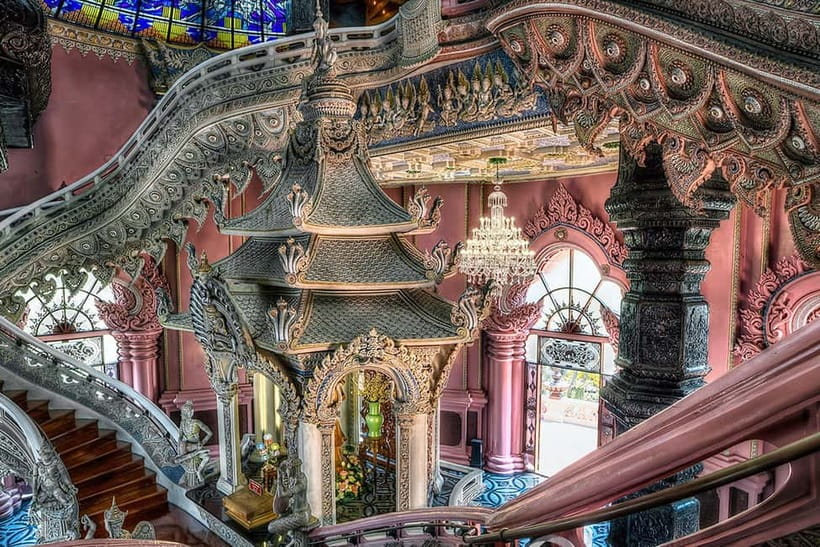
The simplest stated route is the BTS Skytrain Green Line to Chang Erawan Station, also identified as E17. Leave at Exit 2, where a free shuttle tuk-tuk runs every day to the museum. This is useful because transfers are not included with the ticket, but you can avoid arranging a separate paid ride for the station-to-museum leg.
The museum is in Samut Prakan, in Central Thailand. The ticket does not include transport from your hotel or from elsewhere in Bangkok, so account for that part of the journey when planning your day. The free shuttle is specifically described as serving the station, not as a general pickup service around the city.
Because the shuttle is an important part of the route, check the current BTS journey and allow time to connect at the station. No shuttle schedule or journey duration is provided, so don’t assume a particular departure interval. If you have a tight onward plan, leave room for the transfer rather than relying on a precise arrival time.
Dress, manners, and photography
Dress modestly. Sleeveless shirts and short skirts are not permitted, and shorts are also listed among the prohibited clothing. If you’re visiting in warm weather, choose clothing that covers your shoulders and legs enough to meet the rules. This is easier than arriving at the entrance and having to rethink your outfit.
Food and drinks are not allowed, and pets are not permitted. Alcohol and drugs are prohibited as well. The request to be quiet and respectful reflects the museum’s sacred objects and the devotional meaning attached to the site.
Photography is one of the pleasures here, with opportunities inside and outside the museum. Personal pictures are fine, but taking photographs or videos for commercial purposes inside is not permitted. If you’re planning to create professional or commercial content, don’t assume that a standard admission ticket grants permission.
Who will get the most from a visit
I’d recommend the Erawan Museum if you enjoy buildings that make a strong impression and places where art, belief, and architecture overlap. The elephant is a compelling reason to come, while the Underworld, Earth, and Heaven sections add a framework for understanding the museum beyond its exterior.
It also suits visitors interested in Thai cultural heritage and the story of private collecting. Lek Viriyapant’s intention to preserve antiques and sacred objects gives the museum a clear purpose, and his family’s completion of the project adds a human thread to the visit.
It may be less suited to you if you want a guided tour, a detailed itinerary of exhibits before you arrive, or transport included from your hotel. Those services are not part of this ticket. You’ll need to make your own way to Chang Erawan Station and follow the museum’s rules once inside.
The overall rating is 4.8 out of 5 from 89 ratings, and one five-star comment calls it a great experience and recommends it. That positive response is encouraging, but the best reason to book is still a match with your interests: the museum’s unusual scale, its three-part symbolism, and its carefully preserved collection.
Should you book the Erawan Museum ticket?
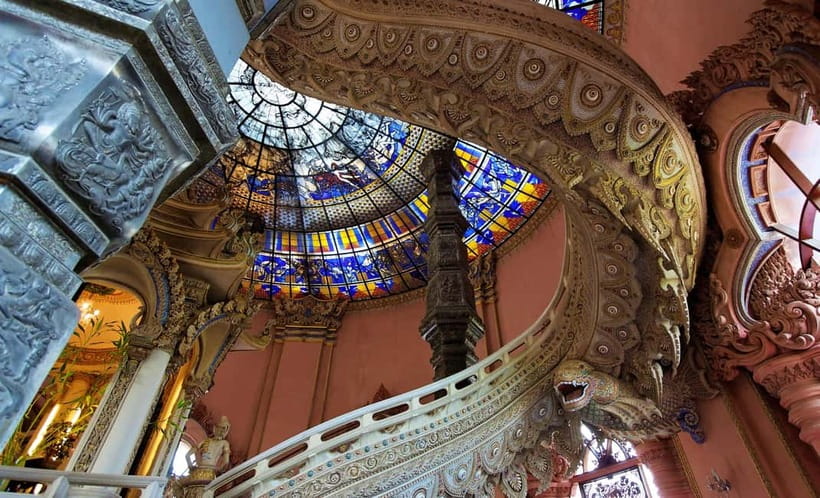
Book it if you want to see the three-headed elephant up close, enjoy taking photos, or are curious about the story behind a museum built to protect a collector’s heritage. At $12, admission includes the museum, the surrounding area, and small devotional offerings, while the BTS and free shuttle make the final leg manageable.
Skip it if you need a guided experience or want transport included from central Bangkok. And plan your clothing before you set out: modest dress is required, with shorts, sleeveless tops, and short skirts not allowed. For a self-guided visit focused on architecture, cultural meaning, and a memorable landmark, this is a worthwhile stop.
FAQ
How much does the Erawan Museum admission ticket cost?
The ticket costs $12 per person for non-Thai visitors.
How do I get to the museum by public transport?
Take the BTS Skytrain Green Line to Chang Erawan Station, E17, and exit at Exit 2. A free shuttle tuk-tuk runs from there to the museum every day.
Does the ticket include transportation?
No. Transfers are not included, though the free shuttle tuk-tuk from Chang Erawan Station is available.
What does the ticket include?
It includes museum admission, flowers, incense, a lotus flower, access to areas surrounding the museum, and taxes and fees.
What clothing is not allowed?
Shorts, short skirts, and sleeveless shirts are not permitted. Visitors are asked to dress modestly.
Can I take photos inside the museum?
You may take photos and videos for personal use. Photography or video for commercial purposes is not permitted inside.
Just in for Bangkok
- Private Tour to Ayutthaya and Bang Pa In Palace with Boat Tour★ 5.0 · 15 reviews
- Private Tour to Maeklong Railway Market and Floating Market★ 5.0 · 42 reviews
- Private Tour to Ayutthaya, World Heritage Site with Boat Tour★ 5.0 · 55 reviews
- Private Tour – Top 3 Major Monuments (Grand Palace, Wat Pho, Wat Arun)★ 4.5 · 21 reviews
- Private Tour for Ancient City Bangkok and Erawan Museu(min 2 pax)★ 4.5 · 8 reviews
- Private Tour: The Dragon River & Land of Sacred Deities Chachoengsao★ 5.0 · 4 reviews
- Private Tour to Ayutthaya, World Heritage Site with Boat Tour★ 5.0 · 39 reviews
- Private Tour: Temples Tour of Bangkok★ 5.0 · 49 reviews
Erawan Waterfall Tours, compared.


Erawan Waterfalls and Bridge Over River Kwai Tour from Bangkok
Read our review →
Erawan Waterfall and Elephant Care: Private Tour to Kanchanabur
Read our review →
Kanchanaburi Full Day Tour: River Kwai and Erawan Falls
Read our review →
Private Tour to Erawan Waterfall and Boat Tour in Kanchanaburi
Read our review →Samut Prakan Ancient City and Erawan Museum Ticket
Read our review →

Private Tour: Death Railway, Hellfire Pass and Erawan Waterfall
Read our review →Browse the lists this tour appears in