
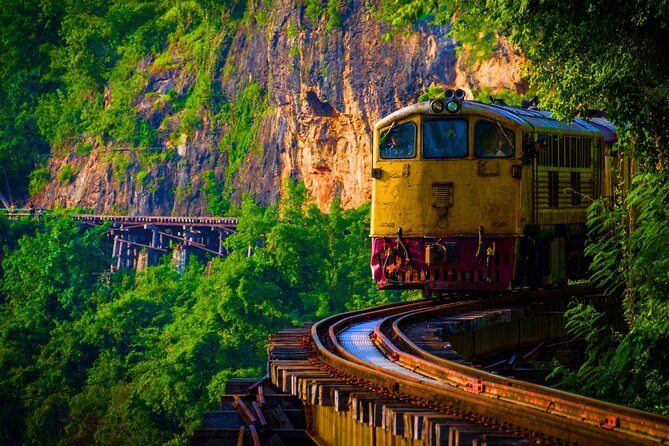
Reviewed · KANCHANABURI TOURS
From Bangkok: Death Railway & Hellfire Pass Tour with Lunch
The most affecting part of this day is not a museum display but the cut through the rock at Hellfire Pass, where you can walk the route forced labourers and Allied prisoners of war carved out for the Thailand-Burma Railway during World War II. The place makes the scale of that work, and its human cost, hard to keep at a distance.
I like two things about this trip: you get both the memorial site and a ride on the railway itself, and the small group limit of 15 makes a long day in a van feel more manageable. Lunch and the train ticket are included, too, which helps make the $82 price easier to assess.
The trade-off is time. This is a 12-hour day with several stops spread across Kanchanaburi, and the memorial walk, museum and cemetery can feel compressed if the schedule runs tight. Go expecting a moving overview, not a slow, self-guided day at every site.
Key points to know before you go
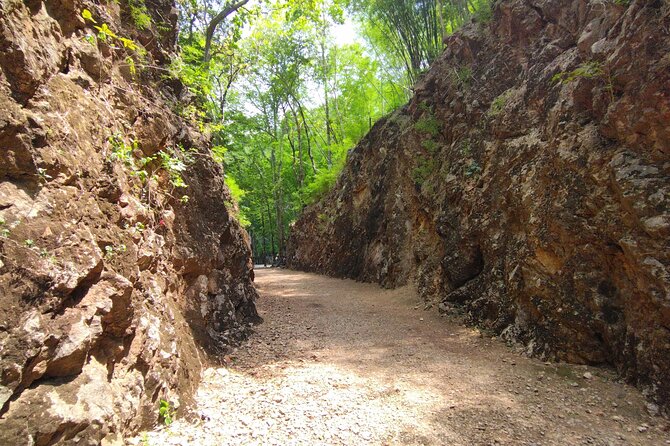
- Hellfire Pass pairs a museum visit with a memorial trail. The walk brings the railway’s construction into focus, but the time allotted may not suit a long, unhurried hike.
- The train ride adds a physical sense of the route. A ticket is included, and the journey is often paired with views of the railway’s surrounding terrain.
- The River Kwai Bridge is a brief stop. Plan for about 30 minutes there, enough to see the landmark but not linger for long.
- The cemetery and museum give the day its historical context. Their order can matter: seeing the research centre before the cemetery may help you understand the losses commemorated there.
- Pickup is available in several Bangkok areas. Confirm your hotel location and the pickup details, especially if you are staying outside the central areas.
- Expect a full day, not a leisurely outing. The trip starts at 7:00 am and takes about 12 hours, with time on the road as well as at the sights.
From Bangkok to Kanchanaburi: a long day with a purpose
Kanchanaburi is far enough from Bangkok that visiting the railway sites independently takes planning. This tour folds transport, a guide, lunch, entry fees and a train ticket into one day, so you can focus on the places rather than arranging each connection yourself.
The small-group cap is 15 people. That is a useful middle ground: there is company on the road, but the group is limited compared with a large coach tour. An air-conditioned van is included, and hotel pickup and drop-off are offered in areas that include Chatuchak, Lard Pao, Bang Kane and Don Muang, as well as Suvarnabhumi and other locations. Check that your hotel is within the service area before booking.
The day begins at 7:00 am and lasts about 12 hours. That early start is practical, given the distance and number of stops, but it means you should keep the evening clear. The guide may not accompany you all the way back to your hotel at the end; in that case, the driver is responsible for your drop-off.
An English-speaking guide is included. Alex is one guide named for this route, though you should not assume you will have the same guide on your departure. A guide matters here because the sites are more than a collection of railway landmarks: the memorials and museum help explain who built the line, and the conditions under which they worked.
More Kanchanaburi trips around Bangkok:
- From Bangkok: Erawan Park & Kanchanaburi Small-Group Tour
★ 4.5 · 1,582 reviews - From Bangkok: Historical Day Tour to River Kwai
★ 4.6 · 868 reviews - Bridge on the River Kwai and Thailand-Burma Railway Tour
★ 4.5 · 658 reviews
Hellfire Pass: the walk that gives the railway its meaning
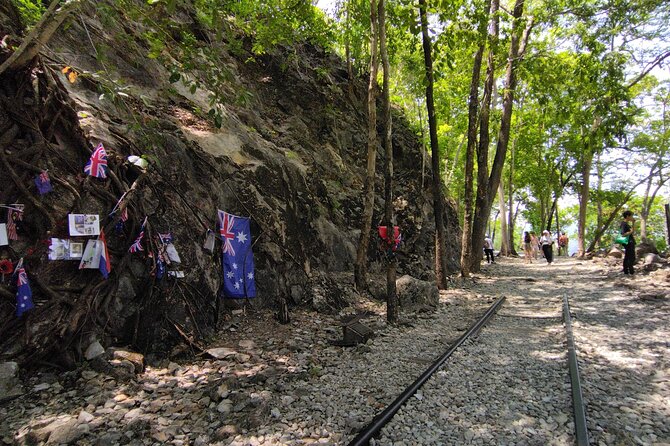
Hellfire Pass is the emotional centre of the tour. The name refers to a railway cutting through rock, associated with punishing work by Allied prisoners of war and Asian labourers during the construction of the Thailand-Burma Railway. At the site, you can see the cut and walk part of the memorial trail, rather than only reading about the railway in a city museum.
The visit includes the Hellfire Pass Interpretive Centre and Memorial Walking Trail. The listed stop is about an hour, including admission. That may be enough to see the centre and take a shorter walk, but it is not a generous allowance if you want to read every exhibit and spend much longer on the trail. One account of the day found that the museum and walk were each given less time than expected, so be ready to keep an eye on the clock.
I would treat the walk as a moment for attention, not exercise. The terrain and the setting give the place a weight that photographs cannot quite convey. If you have mobility concerns, the supplied details do not specify the trail’s accessibility or walking conditions, so ask the operator before booking rather than assuming the full route will suit you.
The museum provides the historical frame for what you see outside. It presents the human suffering behind the railway, and can make the trail more meaningful if you visit it before walking. Since the order of stops may vary, ask your guide how the day is sequenced and whether you will have time to explore both parts.
Riding the Death Railway: scenery beside a hard history
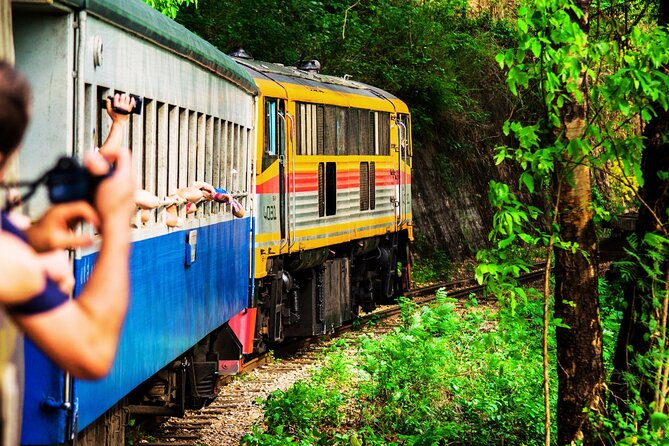
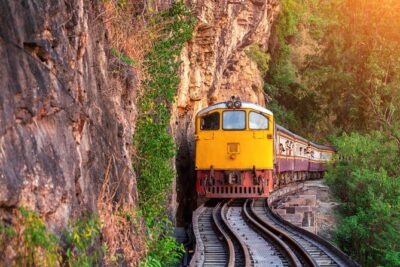
The railway ride is the other distinctive element. The tour includes a train ticket, and the itinerary gives the Nam Tok stop about an hour and 40 minutes. This part of the day connects the story told at Hellfire Pass with a working railway route, and lets you experience a stretch of the line rather than viewing it only from a roadside stop.
The ride is often remembered for its views, but the scenery should not soften the history. The railway was built under brutal conditions during the war, and its name reflects the deadly toll of its construction. A guide can help connect the line you see from the train to the people whose labour built it.
Lunch is included, and one account of the trip places it at Wang Pho, with the train ride following. The meal was described as enjoyable, but the exact arrangement may vary. It is worth checking the day’s schedule with the guide, especially if you are concerned about how much time you will have for lunch and the railway.
There is a practical limit to this stop: the train ride is one segment of a tightly packed day, not a long rail excursion. You get the experience of travelling on the Death Railway, but do not book this expecting hours aboard the train. For many visitors, even a short ride adds a valuable physical dimension to the day.
The Bridge over the River Kwai: a landmark in half an hour
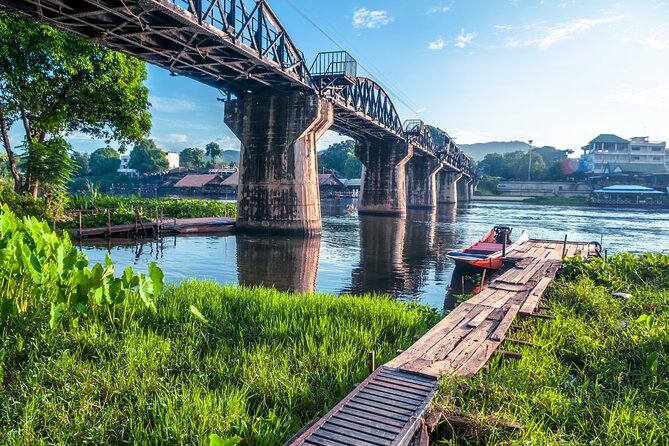
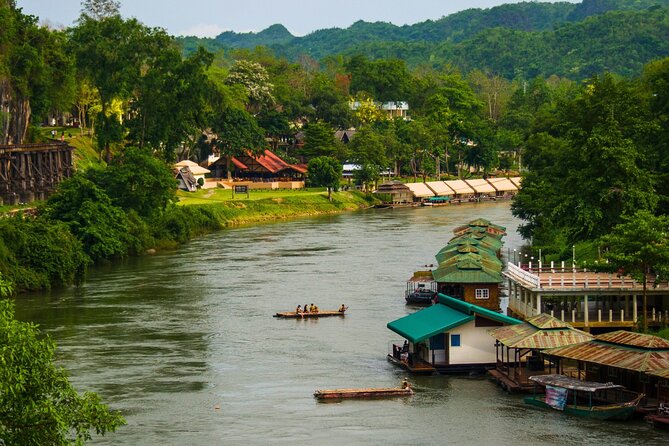
The Bridge over the River Kwai is one of the best-known sights in Kanchanaburi and a clear link to the railway’s history. The tour allows about 30 minutes at the River Khwae Bridge station, with no admission fee listed. That gives you a chance to see the bridge and orient yourself, but it is a short stop by design.
Treat this as a focused visit. You can look at the structure, take in the river setting and hear how the bridge fits into the railway story. If you want a long pause or extensive time to explore the area, this schedule may feel brisk.
The bridge is a useful visual counterpoint to Hellfire Pass. At the cutting, the labour is visible in the rock; at the river, you see a major piece of railway infrastructure. Together, the stops help show how the route was built across very different terrain.
A few more Bangkok tours to look at
- Bangkok: Damnoen Saduak Market and Maeklong Railway Market
★ 4.5 · 26,723 reviews - The Old Siam: Damnoen Saduak and Maeklong Railway Market
★ 4.5 · 10,992 reviews - From Bangkok: Ayutthaya Temples Guided Tour with Lunch
★ 4.7 · 10,535 reviews - Bangkok: Train Market & Floating Market with Boat Ride
★ 4.7 · 9,547 reviews
The cemetery and railway museum: context before remembrance
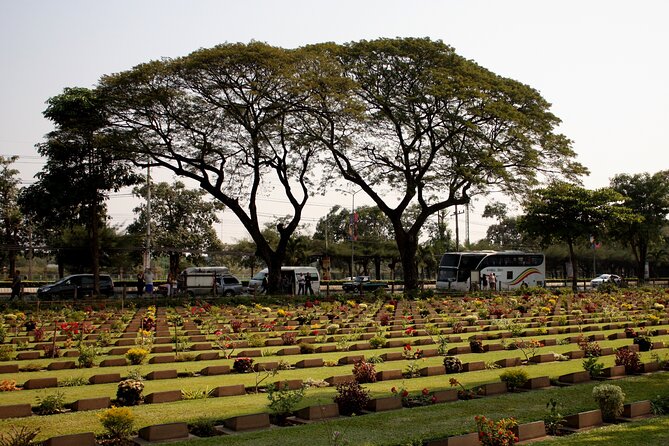
The Kanchanaburi War Cemetery is a quiet, carefully kept memorial to Allied prisoners of war and labourers who died during construction of the railway. The tour allows about an hour here. It is a solemn stop, and you may want to leave room for a slower pace than you would at a conventional attraction.
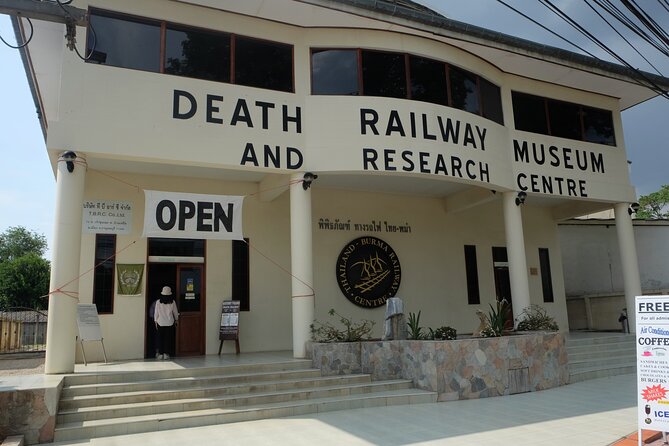
The Death Railway Museum and Research Centre adds historical detail, with exhibits on the railway and the people who suffered during its construction. Admission is included, and the scheduled visit is about an hour. One practical point: the order of the cemetery and museum can affect how much context you have. The research centre first may help explain the events and losses you encounter at the cemetery. If the cemetery comes first, ask your guide to give you some background before you walk through.
These are not interchangeable stops. The museum explains; the cemetery asks for quiet reflection. Together they deepen the day beyond a scenic train ride, but they can also make the schedule feel emotionally and physically demanding. Take a moment between sites if you need one, and do not feel obliged to treat each stop as a photo opportunity.
Is $82 good value for this day?
At $82 per person, the price includes an air-conditioned vehicle, lunch, an English-speaking guide, travel insurance, fees and taxes, and a train ticket. Pickup and drop-off are also offered for hotels within the service area. Those inclusions matter on a full-day trip outside Bangkok, where arranging transport and railway tickets yourself would take time and coordination.
The strongest value is convenience combined with access to several connected sites. You visit Hellfire Pass, ride the railway, see the bridge, and have time at both a museum and cemetery in one outing. If you want a broad introduction to the railway’s history without managing the logistics yourself, the bundled price is reasonable.
The compromise is how much time you get at each place. The day covers a lot of ground, so the cost buys breadth and transport more than a leisurely visit. If you want to spend several hours walking Hellfire Pass or reading every museum display, consider whether a private or multi-day plan would better fit your pace. Gratuities are not included.
Who should book this tour?
Book it if you have one day available from Bangkok and want to understand the Death Railway through a mix of memorials, a museum, a bridge visit and a train ride. It is particularly suited to people who value historical context and are prepared for a sobering day rather than a purely scenic excursion.
It is less suited to anyone who dislikes early starts, long van journeys or a busy itinerary. The tour is limited to 15 people, but the number of stops still makes the day feel structured. If you want extra time for the walking trail, ask how long the Hellfire Pass visit will be on your date before you commit.
Hellfire Pass is scheduled to close on December 5, 24, 25, 26, 27 and 31, 2025, and January 1, 2026. On those dates, the alternative is Wat Tham Suea, also known as Tiger Cave Temple, in Kanchanaburi. Confirm the planned stop before booking if Hellfire Pass is the main reason for your trip.
The tour offers free cancellation up to 24 hours before its start time. Changes made less than 24 hours ahead are not accepted, and cancellations inside that window are not refundable. Most people can participate, but the available details do not give specific accessibility information for the walking trail.
Should you book it?
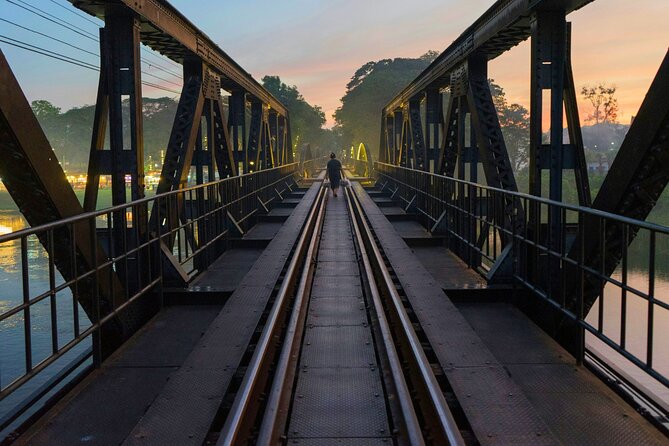
I would book this if you want a thoughtful, guided introduction to Kanchanaburi’s railway history and can accept a packed 12-hour schedule. The strongest reasons are the Hellfire Pass walk and the included train ride, with the museum and cemetery adding essential context.
Skip it if your priority is an unhurried hike or long visits at every stop. For a first visit from Bangkok, though, the mix of transport, history and railway scenery makes this a practical and meaningful use of a day.
FAQ
How long is the tour?
The tour lasts about 12 hours and starts at 7:00 am.
Is hotel pickup available?
Yes. Pickup and drop-off are offered for hotels in several areas, including Chatuchak, Lard Pao, Bang Kane, Don Muang and Suvarnabhumi. Confirm that your hotel is covered.
What is included in the price?
The tour includes an air-conditioned vehicle, lunch, an English-speaking guide, travel insurance, fees and taxes, and a train ticket.
How many people can join?
The maximum group size is 15 people.
Is Hellfire Pass open every day on this tour?
No. It is scheduled to close on December 5, 24, 25, 26, 27 and 31, 2025, and January 1, 2026. Wat Tham Suea, also called Tiger Cave Temple, is the stated alternative on those dates.
Is the Bridge over the River Kwai admission included?
The bridge stop is listed as having no admission fee.
Can I cancel for a refund?
You can cancel at least 24 hours before the start time for a full refund. Cancellations made less than 24 hours before the start time are not refundable.
Just in for Bangkok
- Private Tour to Ayutthaya and Bang Pa In Palace with Boat Tour★ 5.0 · 15 reviews
- Private Tour to Maeklong Railway Market and Floating Market★ 5.0 · 42 reviews
- Private Tour to Ayutthaya, World Heritage Site with Boat Tour★ 5.0 · 55 reviews
- Private Tour – Top 3 Major Monuments (Grand Palace, Wat Pho, Wat Arun)★ 4.5 · 21 reviews
- Private Tour for Ancient City Bangkok and Erawan Museu(min 2 pax)★ 4.5 · 8 reviews
- Private Tour: The Dragon River & Land of Sacred Deities Chachoengsao★ 5.0 · 4 reviews
- Private Tour to Ayutthaya, World Heritage Site with Boat Tour★ 5.0 · 39 reviews
- Private Tour: Temples Tour of Bangkok★ 5.0 · 49 reviews
Kanchanaburi Tours, compared.

Bridge on the River Kwai and Thailand-Burma Railway Tour
Read our review →
Erawan Waterfalls and Bridge Over River Kwai Tour from Bangkok
Read our review →
Kanchanaburi Full Day Tour: River Kwai and Erawan Falls
Read our review →
Floating Markets and Bridge on River Kwai Tour from Bangkok
Read our review →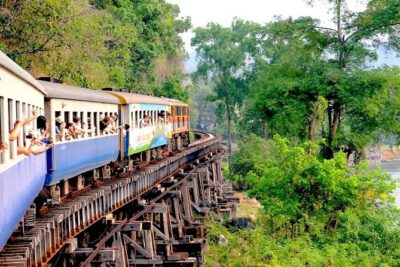
River Kwai Day Tour from Bangkok – History, Scenery & Culture
Read our review →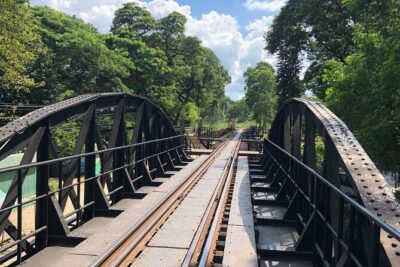
Bridge over River Kwai and Hellfire Pass Tour with Train Ride
Read our review →Browse the lists this tour appears in