
Reviewed · BANGKOK TEMPLE TOURS
Bangkok: Wat Pho and Wat Arun Guided Walking Tour
Wat Pho’s huge Reclining Buddha and Wat Arun’s bright, mosaic-covered chedi give you two very different views of Bangkok’s temple life in one compact outing. I like the way this three-hour walk pairs famous sights with a guide who can explain what you’re seeing, and I like that coconut water is included for a welcome pause between stops.
The main catch is that entry tickets cost extra: 300 baht for Wat Pho and 200 baht for Wat Arun. You’ll also be on your feet in the heat, so bring comfortable shoes, sun protection, and water beyond what’s provided.
Key points before you book
- Two major temples in three hours: Plan for about 1.5 hours at each site, with the route starting and ending at Tha Tian Pier.
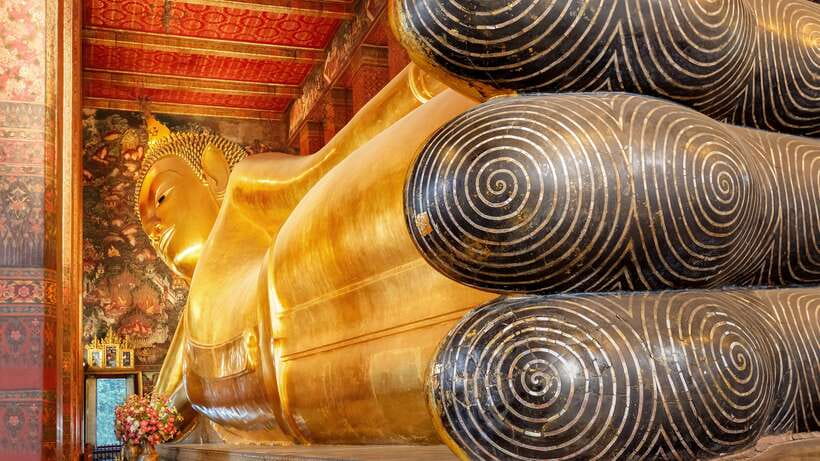
- A remarkable Buddha at Wat Pho: The 46-meter Reclining Buddha is the central sight, alongside colorful mosaic shrines and broad temple grounds.
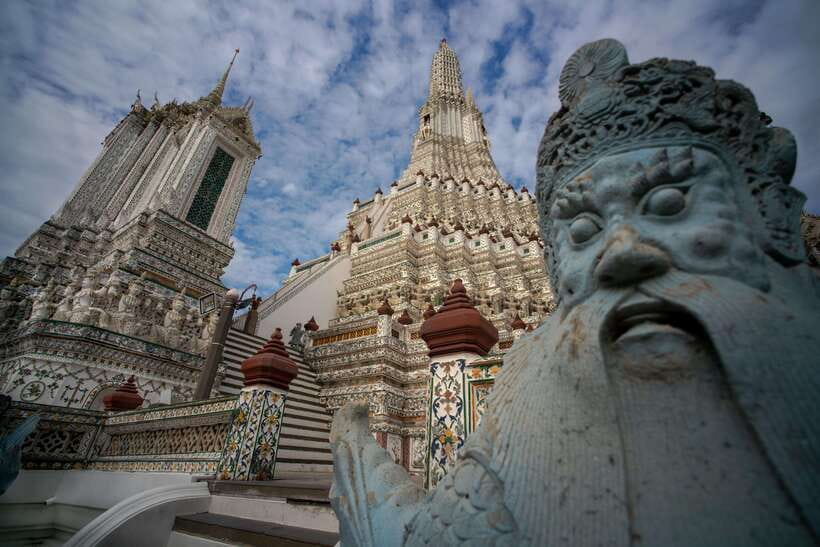
- A riverside landmark at Wat Arun: The temple’s enormous white chedi is decorated with thousands of colorful mosaic pieces.
- Good guides make the difference: Guides such as Nancy, Sun, Jack, and Tee have been praised for clear explanations, humor, patience, and help with photos.
- Budget for admission: The $17 tour price does not cover the 300-baht Wat Pho ticket or 200-baht Wat Arun ticket.
- Dress for temple rules and tropical weather: Cover your shoulders and knees, and bring a hat, sunscreen, and comfortable shoes.
Two temples, one useful introduction to Bangkok
This tour is a practical way to meet two of Bangkok’s best-known religious sites without trying to work out every detail alone. In three hours, you get a guide’s explanation of the temples and Buddhism, time to look around, and a route linking the landmarks on foot.
That guidance matters. A temple can be beautiful at first glance, but a little context helps you understand why its statues, shrines, and architectural details matter. Guides on this tour have been praised for explaining Thai history and Buddhist traditions in accessible terms, while leaving room for questions and independent looking. Some, including former monk Tee, bring personal experience to their explanations.
The experience is also short enough to fit into a busy Bangkok schedule. It is not a slow, all-day temple study, and you should not expect to see every corner of either complex. Instead, think of it as a well-focused introduction: two important sites, a guide to help you make sense of them, and enough time for the main sights.
More temple tours around Bangkok:
- From Bangkok: Ayutthaya Temples Guided Tour with Lunch
★ 4.7 · 10,535 reviews - Bangkok: City Highlights Temple and Market Walking Tour
★ 4.5 · 3,990 reviews - Bangkok by Night: Temples, Markets and Food Tuk-Tuk Tour
★ 5.0 · 3,752 reviews
Starting at Tha Tian Pier
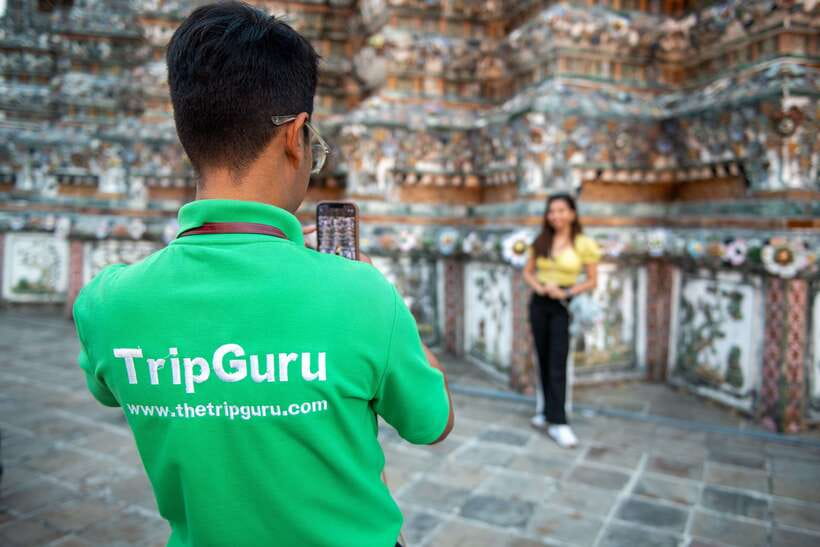
The meeting point is Tha Tian Pier, where you should arrive 10 minutes before your scheduled start. Your guide will carry a TripGuru sign, and the team is expected to email you the evening before to confirm the meeting point and time.
Getting to the pier deserves a little planning. Bangkok traffic can slow a car journey, and one visitor specifically advised taking the MRT rather than driving. That is useful advice if you are coming from elsewhere in the city: allow a margin for the trip, and do not assume a short distance on a map means a quick ride.
The tour is a walking experience, not a hotel pickup service. You need to make your own way to the meeting point and back from it. The route is listed as returning to Tha Tian Pier, which gives you a clear endpoint for planning the rest of your day.
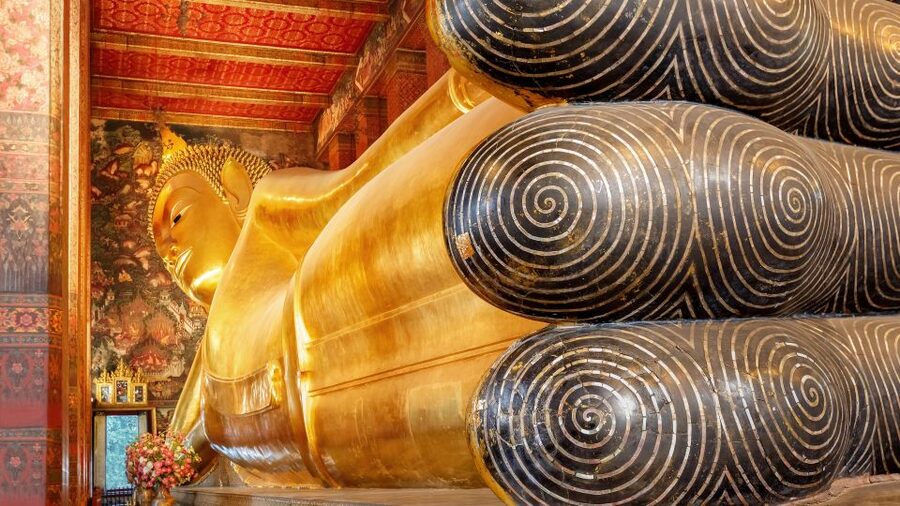
Wat Pho and the 46-meter Reclining Buddha
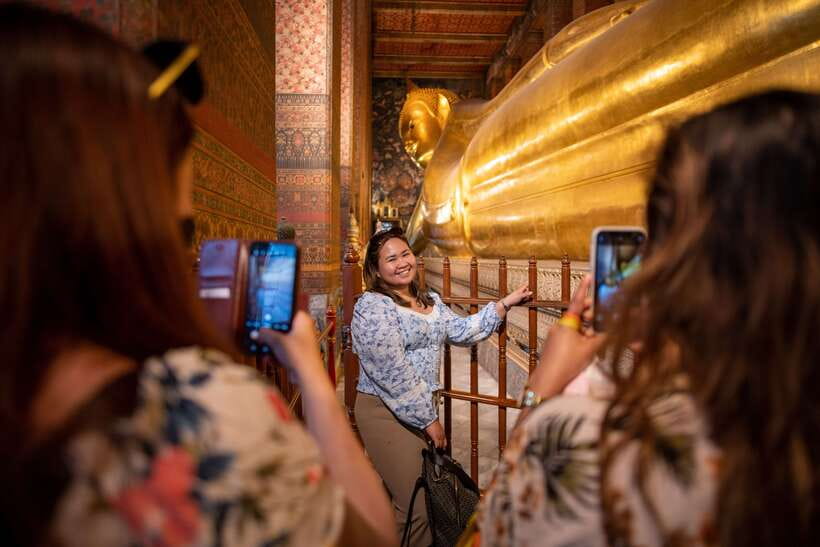
Wat Pho is known for its 46-meter-long Reclining Buddha, an immense figure that makes an immediate impression. The scale is the obvious wonder, but your guide can also help you notice the colorful mosaic shrines and understand the meaning of different parts of the temple.
The listed plan allows about 1.5 hours here. That is enough to see the principal sights and get an overview, but it is not an invitation to linger indefinitely. If you like taking photographs, looking closely at architectural details, or moving at a slower pace, keep an eye on the group’s timing and ask your guide how much free time you will have.
Guides have been praised for balancing explanation with personal exploration. That balance is valuable at a complex site: too much talk can make a temple visit feel like a classroom, while no context can leave you wondering what you are looking at. Several guides, including Nancy, Sun, Jack, and Tee, have been described as patient and good at answering questions. Some have also helped people find photo spots or taken pictures for the group.
The temples are active spiritual places, not just photo backdrops. Dress respectfully and follow your guide’s instructions. Clothing that exposes the shoulders, underarms, back, or knees is not allowed at some sites on this tour, and the dress code is strict. A scarf, sarong, or sweater can provide a cover-up if your clothes do not meet the requirements.
Wat Arun’s mosaic-covered chedi
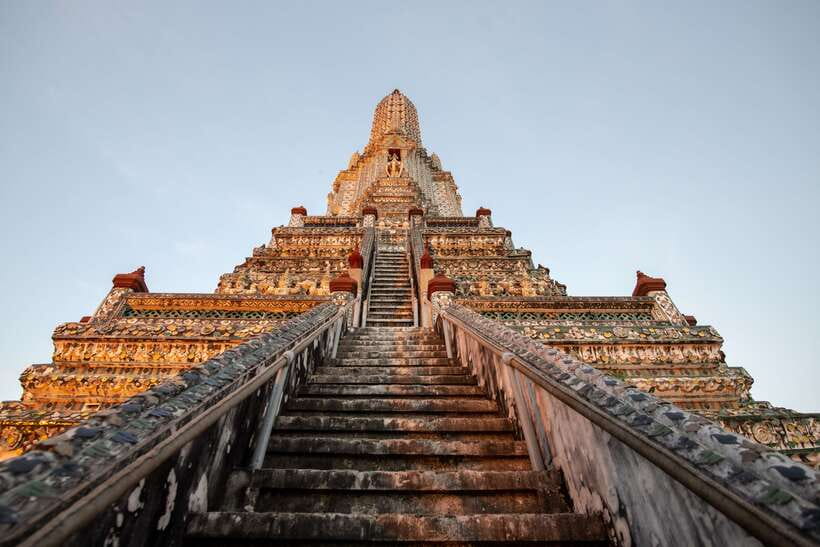
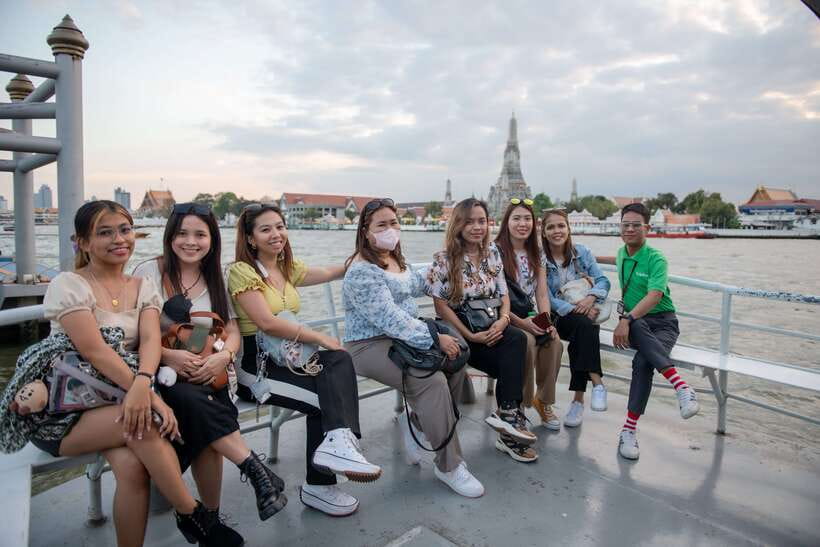
Wat Arun brings a different look and setting. This roughly 300-year-old temple sits beside the Chao Phraya River and is famed for its enormous white chedi, inlaid with thousands of colorful mosaic pieces. Its intricate surface rewards a closer look, while the riverside location gives it a distinctive presence among Bangkok’s landmarks.
The tour sets aside about 1.5 hours for the visit. That gives you time for a guided introduction and sightseeing, though the exact order of the two temples may vary. The planned route describes Wat Pho first and Wat Arun second, while one visitor described seeing Wat Arun before spending more time at Wat Pho. If the sequence matters to you, ask the guide at the start how the day is arranged.
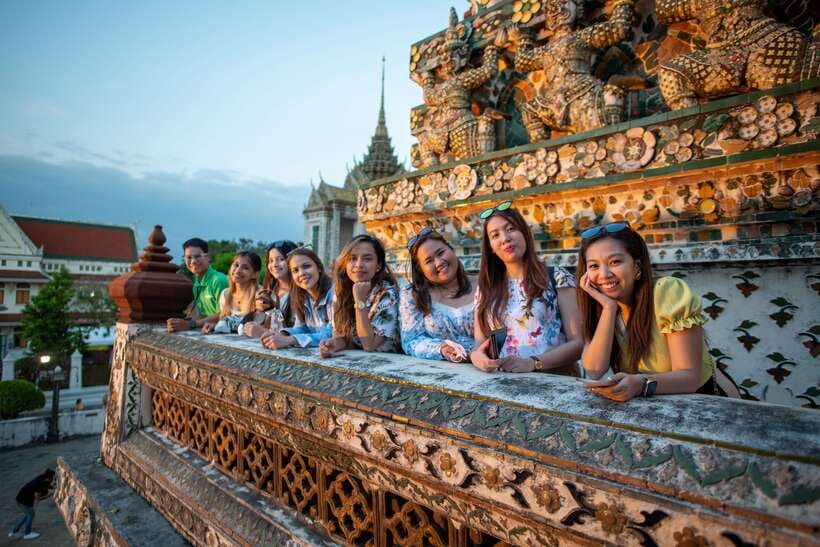
Wat Arun is also a popular place for photographs. That is part of the appeal, but it can make patience useful when you want a clear shot. You may appreciate having a guide who knows where to pause and who can help take pictures, as some have done for visitors. Still, the best reason to look closely is the workmanship in the chedi’s many small pieces, not simply the camera view.
More walking tours around Bangkok:
- Bangkok: Grand Palace and Wat Phra Kaew Guided Walking Tour
★ 4.4 · 2,417 reviews - Bangkok Authentic Tasting Thai-Chinatown Walking Food Tour
★ 4.9 · 852 reviews - Bangkok: Discover a Taste of Chinatown – 2 Hr Walking Tour
★ 4.2 · 152 reviews - Bangkok: Grand Palace and Wat Arun Guided Walking Tour
★ 4.5 · 118 reviews
The guide shapes the quality of the visit
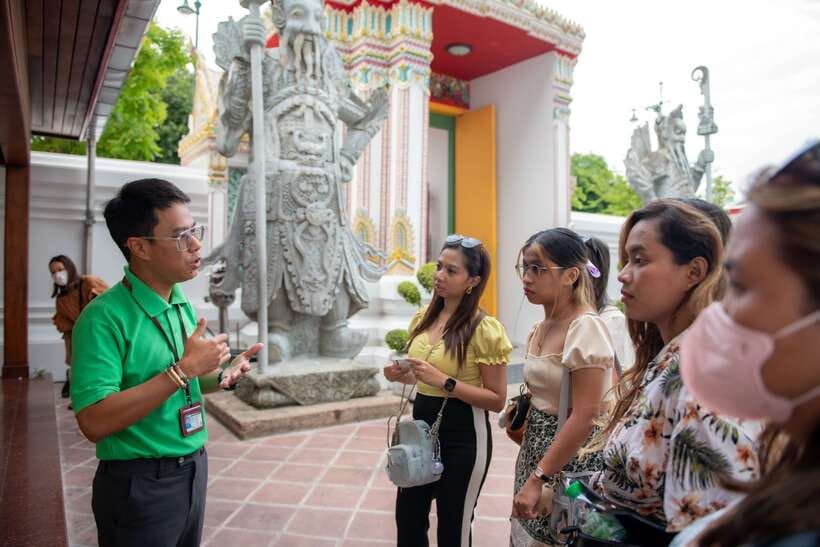
The temples are the main attraction, but the guide can turn a checklist visit into a more meaningful one. The most consistently praised qualities are clear explanations, enthusiasm for Thai history, patience, and a friendly manner. Guides named in recent experiences include Nancy, Sun, Jack, Tee, Cherry, Angie, and others. Your guide will depend on the departure, so treat those names as examples rather than a promise.
Good guiding here means more than reciting dates. It can connect the temple architecture with Buddhism and Thai culture, explain what you are looking at, and make it easier to navigate the grounds. Visitors have also appreciated guides who keep the tone light, answer questions, help with photos, and watch out for people struggling in the heat.
There is one practical limitation: a walking group in busy surroundings can be hard to hear. At least one person found street noise made the guide difficult to understand, and another suggested a microphone and speaker. If you have trouble hearing, stay close to the guide and ask them to repeat a point when needed.
Group size is not guaranteed to be small. One visitor had a small group, which made the experience feel easygoing, but the available information does not promise a particular group limit. The pace and atmosphere may therefore depend partly on the departure you choose.
What three hours feels like on foot
The schedule is compact: roughly 90 minutes at each temple, with walking between the sites and a coconut-water stop. That makes the tour a manageable introduction, but it still means a good stretch on your feet. Wear shoes you can walk in comfortably, and do not save your only energy for the final stop.
Heat is a real consideration. One guide was praised for finding shaded spots and checking on people who were struggling in the sun. That is thoughtful, but it is still wise to bring your own protection: sunglasses, a hat, sunscreen, and insect repellent are recommended. Carry cash as well, since you will need to pay the temple admission charges separately.
Coconut water is included, and it offers a refreshing pause between visits. Bring extra drinking water, too. The tour’s low-impact approach includes carbon-offset credits and a preference for water in glass bottles, but one visitor still suggested bringing an additional bottle. That is sensible in Bangkok’s heat.
The activity is not suitable for pregnant women, people with mobility impairments, people with heart problems, or people with high blood pressure. If any of those apply to you, this walking route may not be a good fit.
Is $17 good value?
At $17 per person, the tour price is modest for a three-hour guided visit to two major temples. But the real cost is higher once you add admission: 300 baht for Wat Pho and 200 baht for Wat Arun. Those tickets are not included, so budget for 500 baht in total per person, in addition to the tour price.
The value comes from the guide and the convenience of seeing both sites with explanations in one short outing. If you are confident navigating Bangkok and comfortable researching the temples yourself, you could visit independently and avoid the guide fee. But if you want context, help finding your way around, and a planned route, the tour can make the extra cost worthwhile.
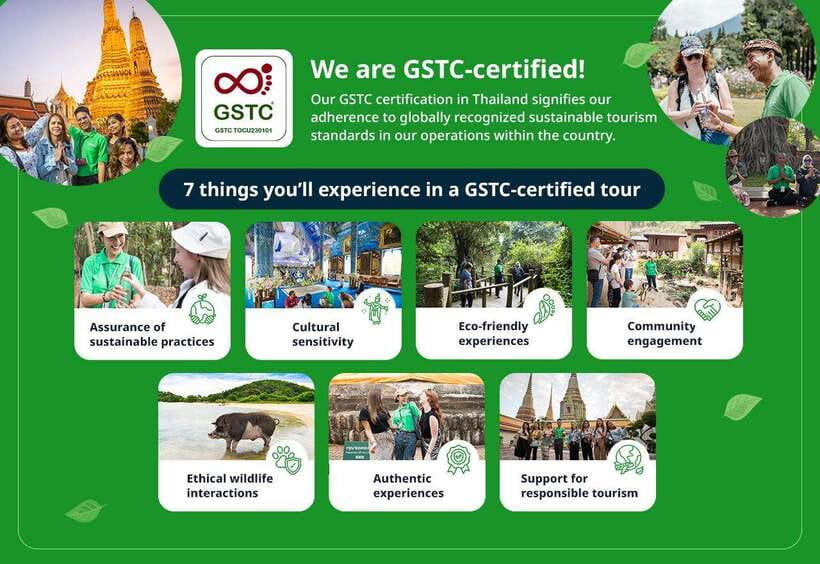
The tour also includes coconut water and carbon-offset credits. It is described as GSTC-certified and designed as a lower-impact way to explore, with efforts such as providing water in glass bottles and offsetting emissions. Those features may matter if you are comparing guided options, though they do not replace the practical need to carry enough water for yourself.
A few practical details before you go
The tour is offered in English and Chinese, with multiple start times shown when you check availability. You can cancel up to 24 hours in advance for a full refund, and a reserve-now, pay-later option is available.
Pack comfortable shoes, sunglasses, a hat, sunscreen, insect repellent, and a camera. Bring cash for admission and a cover-up if your clothing leaves your shoulders or knees exposed. The most useful small precaution is arriving early: the meeting point is clear, but Bangkok traffic can make late arrivals stressful.
Should you book this Bangkok temple walk?
Book it if you want a concise, guided introduction to Wat Pho and Wat Arun, especially if temple symbolism and Thai history matter as much to you as the photographs. The strongest reason to go with a guide is the human context: guides such as Nancy, Sun, Jack, and Tee have been praised for making the sites easier to understand without overwhelming the visit.
Skip it if you need a very slow pace, have mobility or health concerns listed as unsuitable, or prefer to explore entirely on your own. For most visitors with three hours to spare, comfortable shoes, and a plan for the extra entry fees, this is a sensible way to see two major Bangkok temples with useful local insight.
FAQ
How long is the tour?
The tour lasts three hours, with about 1.5 hours planned at each temple.
Where does the tour meet?
The meeting point is Tha Tian Pier. Your guide will be holding a TripGuru sign, and you should arrive 10 minutes before the scheduled time.
Which temples are included?
The walking tour visits Wat Pho and Wat Arun, then returns to Tha Tian Pier.
Are temple entry tickets included?
No. Wat Pho admission costs 300 Thai baht, and Wat Arun admission costs 200 Thai baht.
What languages are available?
Live guides are available in English and Chinese.
Is coconut water included?
Yes. Coconut water is included in the tour.
What should I wear?
Wear clothing that covers your shoulders and knees. Some sites do not allow clothing that reveals the shoulders, underarms, back, or knees, so bring a sarong, scarf, or sweater if needed.
What should I bring?
Comfortable shoes, sunglasses, a hat, a camera, sunscreen, insect repellent, and cash are recommended. Bring extra water as well.
Who is the tour not suitable for?
The tour is not suitable for pregnant women or people with mobility impairments, heart problems, or high blood pressure.
Just in for Bangkok
- Private Tour to Ayutthaya and Bang Pa In Palace with Boat Tour★ 5.0 · 15 reviews
- Private Tour to Maeklong Railway Market and Floating Market★ 5.0 · 42 reviews
- Private Tour to Ayutthaya, World Heritage Site with Boat Tour★ 5.0 · 55 reviews
- Private Tour – Top 3 Major Monuments (Grand Palace, Wat Pho, Wat Arun)★ 4.5 · 21 reviews
- Private Tour for Ancient City Bangkok and Erawan Museu(min 2 pax)★ 4.5 · 8 reviews
- Private Tour: The Dragon River & Land of Sacred Deities Chachoengsao★ 5.0 · 4 reviews
- Private Tour to Ayutthaya, World Heritage Site with Boat Tour★ 5.0 · 39 reviews
- Scenic Boat Ride & Private Thai Cooking Class in Bangkok with Aoy★ 5.0 · 5 reviews
Bangkok Temple Tours, compared.
City Highlights Temple and Market Walking Tour
Read our review →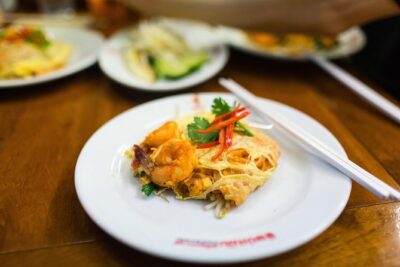
Bangkok by Night: Temples, Markets and Food Tuk-Tuk Tour
Read our review →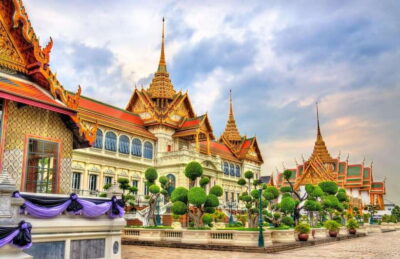
Grand Palace, Wat Pho, and Wat Arun Guided Tour
Read our review →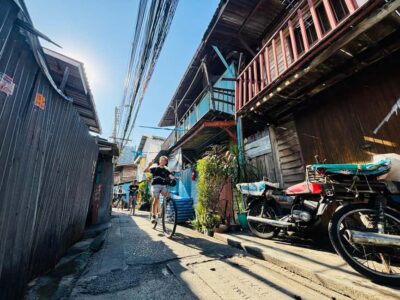
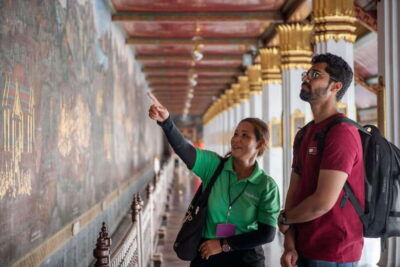
Grand Palace and Wat Phra Kaew Guided Walking Tour
Read our review →
Grand Palace, Wat Pho, Wat Arun Sacred & Local Tour
Read our review →
Ayutthaya Temples and River Cruise from Bangkok
Read our review →Browse the lists this tour appears in