
Reviewed · BANGKOK GRAND PALACE TOURS
Bangkok: Grand Palace, Wat Pho, and Wat Arun Guided Tour
The heart of this tour is its sweep through Bangkok’s most important royal and temple sites: from the Emerald Buddha to the Reclining Buddha, then across to Wat Arun beside the Chao Phraya River. A guide helps connect the glittering buildings to the kings, rituals, and public traditions behind them.
I like two things in particular: the route links three major sights in one outing, and the guide can give context that is easy to miss when you are looking up at gold roofs and porcelain towers. There is also a useful human note: a guide named Meng has been praised for being helpful, though you should not assume he will lead your departure.
The main catch is cost. The $17 tour price does not include the 1,000 baht total entrance fees for the Grand Palace and Wat Phra Kaew, Wat Pho, and Wat Arun. You will also need to dress carefully, and the meeting-point details need confirming because two different starting places are given.
Key points to know before you book
- Four major sights in one route: Visit Wat Phra Kaew, the Grand Palace, Wat Pho, and Wat Arun.
- The Emerald Buddha is the sacred centerpiece: Wat Phra Kaew is regarded as Thailand’s most sacred Buddhist temple.
- Wat Pho has more than its reclining statue: Its marble inscriptions, public medical teaching, and Thai massage tradition give the visit added substance.
- Admission costs are separate: Budget 500 baht for the Grand Palace and Wat Phra Kaew, 300 baht for Wat Pho, and 200 baht for Wat Arun.
- Dress and temple etiquette matter: Cover shoulders and knees, remove shoes before entering temple buildings, and keep photography outside the buildings.
- Confirm where to meet: The route description names River City Bangkok, while the meeting-point details specify the area in front of Tha Chang ferry pier.
A guided route through Bangkok’s royal and religious center
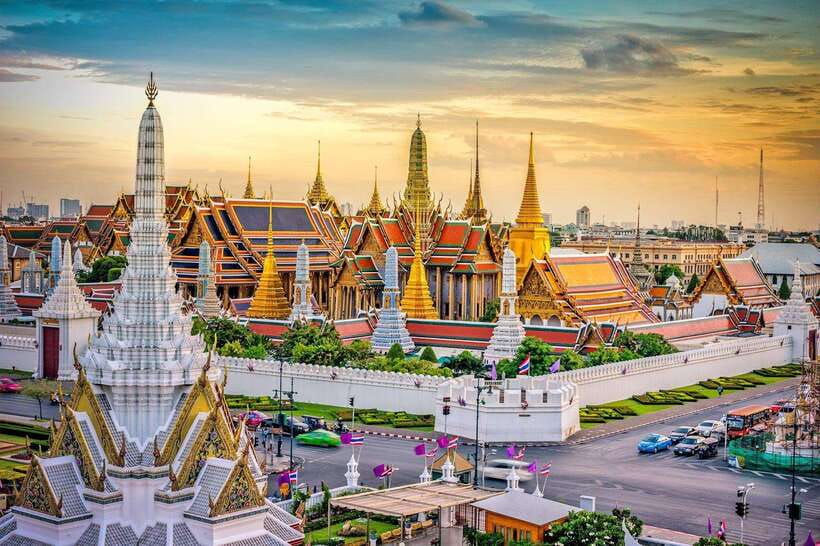
This tour is built around four closely connected places that explain different sides of Bangkok. Wat Phra Kaew is the national shrine and home of the Emerald Buddha. The Grand Palace shows the former royal seat and its continuing role in state events. Wat Pho adds religious, educational, and healing traditions, while Wat Arun gives the itinerary a landmark beside the river.
That combination is useful if you have limited time or want a guide to help make sense of the sites. The buildings can be dazzling, but it is easy to leave with a blur of gold, mosaics, and photographs unless you understand what you are seeing. A licensed English-speaking guide can connect the architecture to the kings of Thailand and the role of each temple.
The experience includes a professional licensed guide and drinking water. Personal expenses and all entrance fees are extra. No tour duration or group size is specified, so ask the provider if either detail affects your plans.
The walk and temple visits are not suited to wheelchair users or people with mobility impairments. You will need comfortable shoes, though you must remove them before entering temple buildings. That combination makes easy-to-remove footwear a practical choice.
More Grand Palace visits around Bangkok:
- Bangkok: Grand Palace, Wat Pho, and Wat Arun Guided Tour
★ 4.8 · 3,632 reviews - Bangkok: Grand Palace and Wat Phra Kaew Guided Walking Tour
★ 4.4 · 2,417 reviews - Bangkok: Grand Palace, Wat Pho, Wat Arun Sacred & Local Tour
★ 4.3 · 2,256 reviews
Start near the river, but verify the meeting point
There is a small but important planning wrinkle: the route description says to meet at River City Bangkok, while the meeting-point information says to meet in front of Tha Chang ferry pier, next to the Grand Palace. These are not the same named location, so do not guess. Confirm the exact address and meeting point with the provider before setting out.
The tour is described as using local transport on the way to the Emerald Buddha Temple. It also passes the amulet market, a historic community market on Rattanakosin Island. This is a useful reminder that the temples sit within a living part of the city, not in an isolated museum district.
The activity ends back at the meeting point. If your day depends on reaching a hotel, ferry, or another appointment afterward, allow for the return and confirm the expected finish time. The tour information does not give a duration.
Wat Phra Kaew and the Emerald Buddha
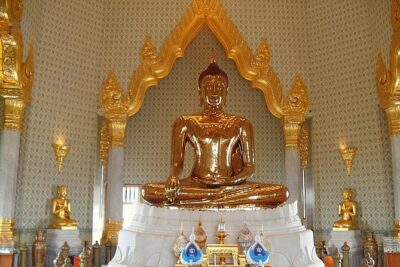
Wat Phra Kaew, officially called Wat Phra Si Rattana Satsadaram, is regarded as Thailand’s most sacred Buddhist temple. Its importance makes it the natural starting point for understanding the country’s royal and religious traditions.
The Emerald Buddha is the central draw, but the temple compound itself is part of the experience. Take time to look beyond the main shrine and notice the surrounding buildings and decorative detail. Your guide can help explain why this site holds such a high place in Thai Buddhism and how it relates to the nearby royal grounds.
There are firm rules here. The chapel is a national shrine, so you must cover your shoulders and knees. Strapless-heel shoes are not allowed, and you must remove your shoes before entering temple buildings. Photography is allowed in the Royal Palace Grounds and the Emerald Buddha Temple compounds, but not inside the buildings.
These rules are worth treating as part of the visit, not an inconvenience to sort out at the entrance. Wear clothes that cover your shoulders and knees from the start, and bring shoes you can slip on and off without a struggle. A hat and sunscreen are also sensible for time spent outdoors.
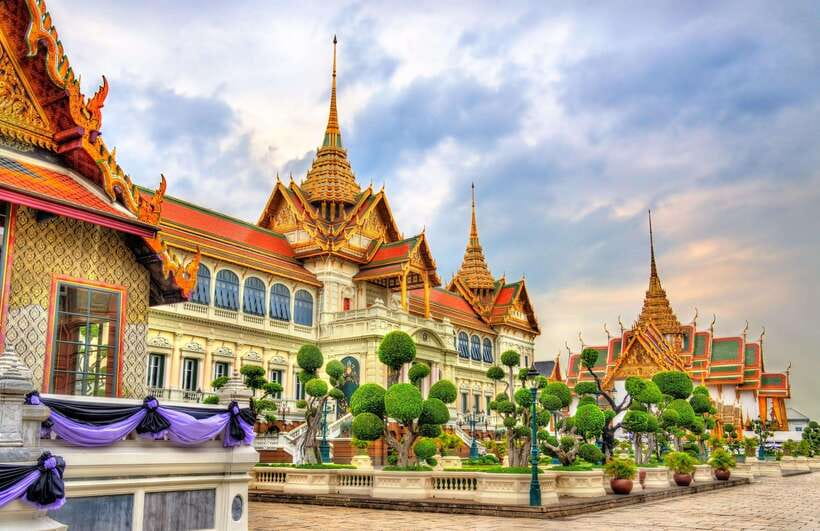
The Grand Palace, once a royal home and still in use
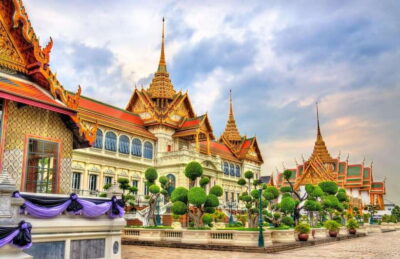
The Grand Palace was the official residence of Thailand’s kings. Today it remains an active setting for official events, royal ceremonies, and state functions. That continued role gives the palace a different feel from a historic house preserved only for visitors.
The scale and decoration can make it tempting to hurry from one striking building to the next. A guide’s explanations are valuable here: they can help you follow the palace’s history and understand its connection to the monarchy. The tour’s focus on the kings of Thailand gives the visit a clear thread rather than leaving you to sort out each building on your own.
Admission to the Grand Palace and Wat Phra Kaew costs 500 baht per person and is not included in the tour price. Keep cash with you, as the practical information recommends bringing it. The fee is a substantial addition to a $17 tour, so compare the full outlay, not just the advertised price, when deciding if this outing suits your budget.
More temple tours around Bangkok:
- From Bangkok: Ayutthaya Temples Guided Tour with Lunch
★ 4.7 · 10,535 reviews - Bangkok: City Highlights Temple and Market Walking Tour
★ 4.5 · 3,990 reviews - Bangkok by Night: Temples, Markets and Food Tuk-Tuk Tour
★ 5.0 · 3,752 reviews - Bangkok: Temples, Canals & Local Life Bike Tour
★ 4.9 · 3,511 reviews
Wat Pho’s Reclining Buddha and public teaching
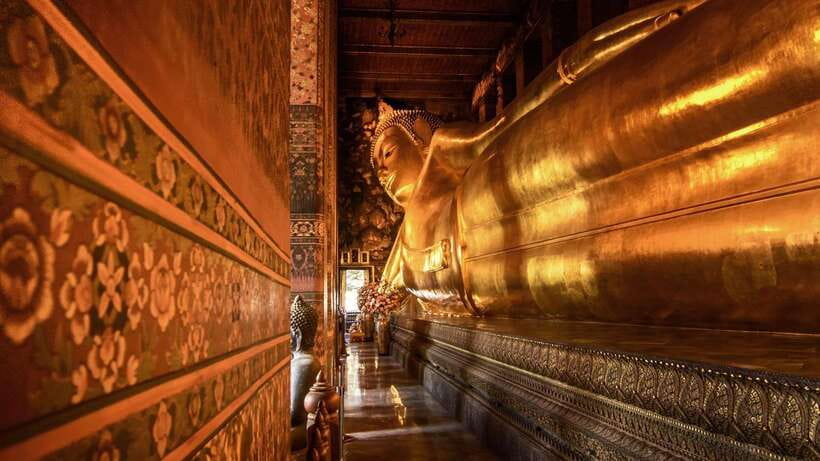
If you select the Wat Pho portion, you will visit the Temple of the Reclining Buddha, one of Thailand’s six highest-grade first-class royal temples. The reclining statue is the famous sight, but the site’s importance goes beyond its scale.
Wat Pho was rebuilt by King Rama I on an earlier temple site and became his main temple. Some of his ashes are enshrined there. That royal connection adds another layer to the tour’s broader account of Thai kingship and religious life.
Look for the marble illustrations and inscriptions around the temple. Wat Pho is considered an early center of public medical education, with material placed there to teach people. The site has also been recognized in UNESCO’s Memory of the World Programme. It is known as the birthplace of traditional Thai massage, which is still taught and practiced at the temple today.
Those details make Wat Pho especially rewarding if you care about how temples served communities beyond worship. The visit is not just a stop for a photograph of the reclining figure; it offers a chance to see how knowledge and healing traditions were shared in a public setting.
The entrance fee is 300 baht per person, separate from the tour price. The route also passes Tha Thien Market, a cultural food market that sells dried and salted seafood and wholesale products. It offers a glimpse of the area’s everyday trade on the way to the temple.
Wat Arun beside the Chao Phraya
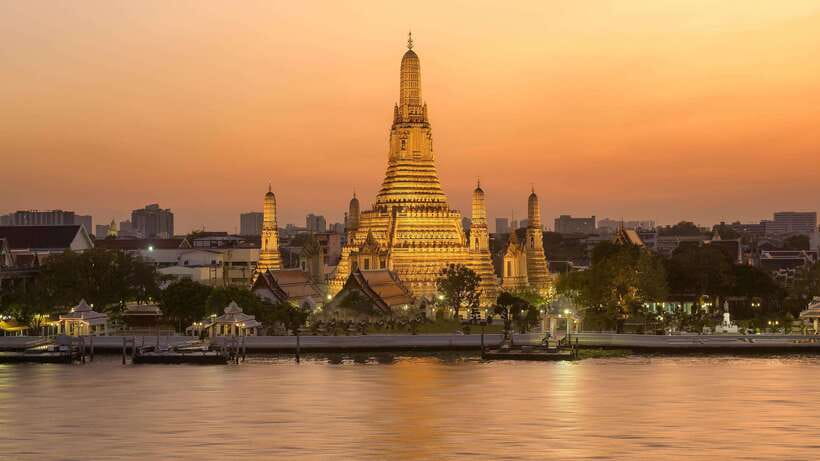
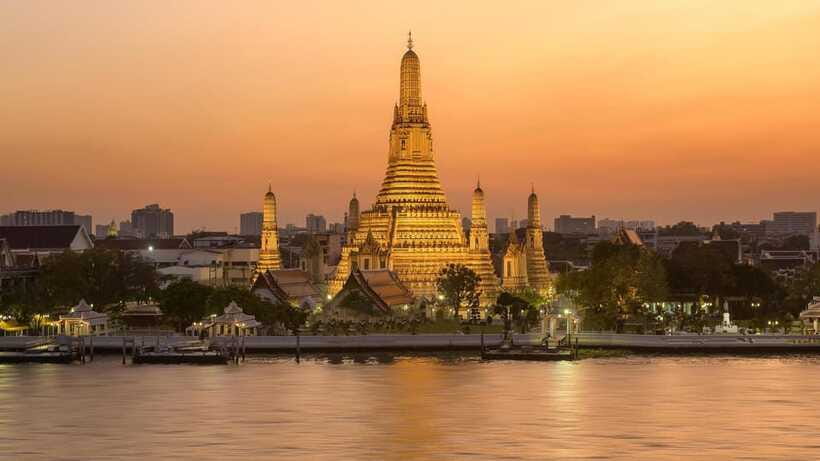
Wat Arun, the Temple of Dawn, completes the route with one of Bangkok’s best-known landmarks. Its giant tower rises about 70 meters beside the Chao Phraya River and is decorated with small pieces of colored glass and Chinese porcelain.
The materials reward a closer look. From a distance, the tower reads as a striking shape on the riverbank; up close, its surface is made from many small decorative pieces. The river setting gives the temple a distinct character from the royal compounds and Wat Pho.
The tour information does not specify how long you spend at each stop or exactly how you travel between all of them. So think of this as a guided overview rather than a slow, highly specialized study of every building. If Wat Arun is your main interest, you may want to check how much time the itinerary allows there.
Admission is 200 baht per person and is not included. Add it to the other listed entry fees when working out the day’s actual cost.
What the $17 price really buys
At $17 per person, the tour price covers a professional licensed guide and drinking water. It does not cover personal expenses or admission to the three paid sites. The listed entrance charges add up to 1,000 baht per person: 500 baht for the Grand Palace and Wat Phra Kaew, 300 baht for Wat Pho, and 200 baht for Wat Arun.
The guide is the main value here. You are paying a modest amount for an organized route and explanations at sites where history, ritual, and royal life overlap. If you would otherwise visit these places without context, a licensed guide can make the day more coherent.
Still, this is not a $17 all-inclusive visit. The separate fees are large enough that you should budget for them before booking. Bring cash for expenses, and do not mistake the low headline price for the full cost of seeing every listed site.
There is some positive feedback about the guiding: Meng is named as helpful, and the guide is also praised for making the sights enjoyable. That is encouraging, but it does not guarantee that Meng will lead your tour. The experience is offered in English.
The activity allows you to reserve and pay later, and it can be cancelled up to 24 hours in advance for a full refund. Those terms offer flexibility if your Bangkok plans are still taking shape.
Dress, shoes, and other practical details
The clothing rules are strict enough to plan around. Shorts, short skirts, and sleeveless shirts are not allowed. For the Emerald Buddha shrine, shoulders and knees must be covered, and strapless-heel shoes are not permitted. Choose an outfit that meets the rules without relying on a last-minute cover-up.
Wear comfortable shoes for moving between the sites, but make sure they are easy to remove. You must take them off before entering temple buildings. A hat and sunscreen will help while you are outside, and drinking water is included.
Photography is permitted in the Royal Palace Grounds and the compounds of the Emerald Buddha Temple, but not inside the buildings. Respect signs and instructions from your guide. Restroom facilities are available.
The route is not suitable for wheelchair users or people with mobility impairments. If you have concerns about walking or managing temple access, ask the operator for specific details before booking. The available information does not describe the walking distance or the exact transport used between each stop.
Who will get the most from this tour?
This outing suits a first-time visitor who wants to see Bangkok’s headline temples in one guided visit and values context over wandering alone. It is especially useful if you want the royal history of the Grand Palace explained alongside the religious importance of Wat Phra Kaew, Wat Pho, and Wat Arun.
It also works for anyone curious about more than architecture. Wat Pho’s public medical teaching and continuing massage tradition add a social and educational angle, while the amulet market and Tha Thien Market offer brief glimpses of commerce around the historic sites.
It is less suitable if you need step-free access, want a leisurely visit at only one temple, or are trying to keep costs tightly capped. The entrance fees increase the real price, and the dress code requires some planning. The unclear meeting-point information is another reason to confirm details before the day.
Should you book it?
Book this tour if you want a guided introduction to Bangkok’s major royal and religious sites and are comfortable paying the separate entrance fees. The combination of Wat Phra Kaew, the Grand Palace, Wat Pho, and Wat Arun gives you a strong overview, while a licensed English-speaking guide can supply the context that turns a sequence of grand buildings into a connected story.
Skip it if your priority is a very low total spend, accessible transport, or an unhurried visit focused on one site. Before booking, confirm the exact starting point, budget the extra 1,000 baht for admission, and dress to cover shoulders and knees. With those points settled, this is a practical way to see four central Bangkok landmarks in one outing.
FAQ
What sites are included in the tour?
The route covers Wat Phra Kaew, also known as the Temple of the Emerald Buddha, the Grand Palace, Wat Pho, and Wat Arun.
Are entrance fees included in the $17 price?
No. The listed fees are 500 baht for the Grand Palace and Wat Phra Kaew, 300 baht for Wat Pho, and 200 baht for Wat Arun.
What should I wear to the temples?
Wear clothing that covers your shoulders and knees. Shorts, short skirts, and sleeveless shirts are not allowed, and you must remove your shoes before entering temple buildings.
Where does the tour start?
The meeting-point details specify in front of the Tha Chang ferry pier, next to the Grand Palace. The route description also names River City Bangkok, so confirm the exact location with the provider before you go.
Is the tour suitable for wheelchair users?
No. It is listed as unsuitable for wheelchair users and people with mobility impairments.
What is included in the tour?
A professional licensed guide and drinking water are included. Personal expenses and entrance fees are not.
Just in for Bangkok
- Private Tour to Ayutthaya and Bang Pa In Palace with Boat Tour★ 5.0 · 15 reviews
- Private Tour to Maeklong Railway Market and Floating Market★ 5.0 · 42 reviews
- Private Tour to Ayutthaya, World Heritage Site with Boat Tour★ 5.0 · 55 reviews
- Private Tour – Top 3 Major Monuments (Grand Palace, Wat Pho, Wat Arun)★ 4.5 · 21 reviews
- Private Tour for Ancient City Bangkok and Erawan Museu(min 2 pax)★ 4.5 · 8 reviews
- Private Tour: The Dragon River & Land of Sacred Deities Chachoengsao★ 5.0 · 4 reviews
- Private Tour to Ayutthaya, World Heritage Site with Boat Tour★ 5.0 · 39 reviews
- Scenic Boat Ride & Private Thai Cooking Class in Bangkok with Aoy★ 5.0 · 5 reviews
Bangkok Grand Palace Tours, compared.
Grand Palace, Wat Pho, and Wat Arun Guided Tour
Read our review →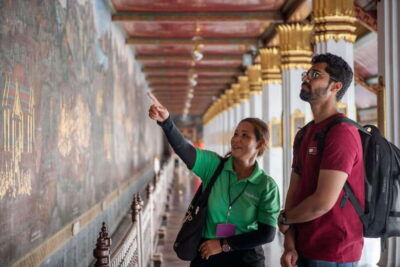
Grand Palace and Wat Phra Kaew Guided Walking Tour
Read our review →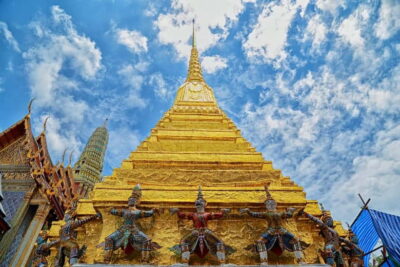
Grand Palace, Wat Pho, Wat Arun Sacred & Local Tour
Read our review →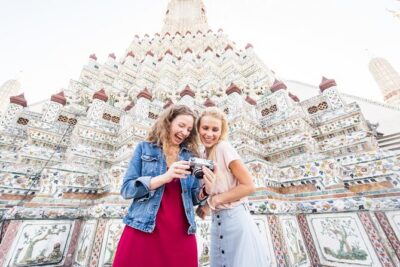
Grand Palace & Temples of Bangkok with experienced guide
Read our review →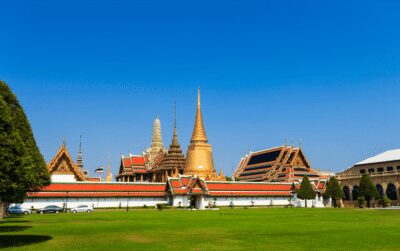
Bangkok City Highlights Tour: Grand Palace & Three Iconic Temples
Read our review →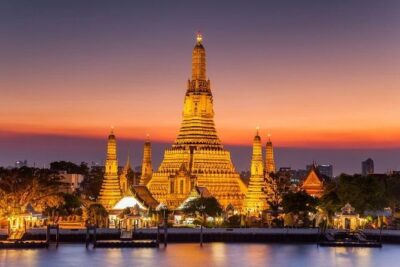
Royal Grand Palace and Bangkok Temples: Half Day Tour
Read our review →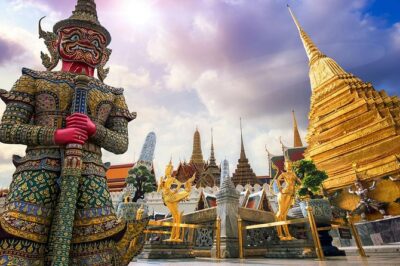
Bangkok’s Grand Palace Complex and Wat Phra Kaew Tour
Read our review →Browse the lists this tour appears in