
Reviewed · BANGKOK COOKING CLASSES
Bangkok: White Lotus Thai Cooking Class with Market Tour
The best part of this Bangkok cooking class starts before you reach the stove. You’ll walk through wholesale produce stalls and the city’s biggest flower market with an instructor who explains what you’re seeing, then turn fresh ingredients into four Thai dishes you can eat as you go.
I especially like the market-to-kitchen format and the chance to make coconut milk from scratch for the mango sticky rice. The class is suitable for beginners, and you can adjust the spice level. One consideration: at 3.5 hours, it takes a good part of your day, and the price does not include transport to the school.
- Shop with context: Explore local fruit and vegetable stalls and Bangkok’s largest flower market with a guide.
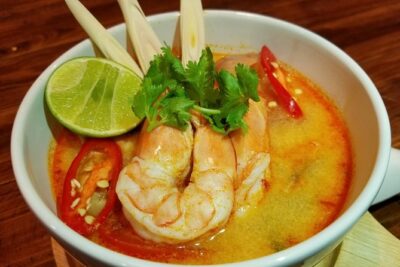
- Cook, don’t just watch: Make Tom Yam Goong, Pad Thai, Som Tam, and Mango Sticky Rice.
- Start with a useful skill: Prepare fresh coconut milk for the dessert.
- Set your own heat level: The spice can be adjusted to your preference.
- Eat the results: Enjoy your dishes in a friendly, home-like school setting.
- Find the school near the MRT: It’s on the second floor of The Market Organization at Paak Klong Talad, a short walk from Sanamchai station.
From Paak Klong Talad’s market stalls to the kitchen
The class begins at White Lotus Thai Cooking School, on the second floor of The Market Organization at Paak Klong Talad. The location is practical for a market-focused outing: Sanamchai MRT station is 150 meters away, and a 7/11 is 60 meters away. The school is close to the river, too, but the key point for planning is that transport to and from the class is not included.
Allow the full 210 minutes. That gives the outing room for both the market visit and the cooking session, rather than treating the market as a quick photo stop before the real activity. If you’re working around other plans, remember that the time covers a meal as well as instruction.
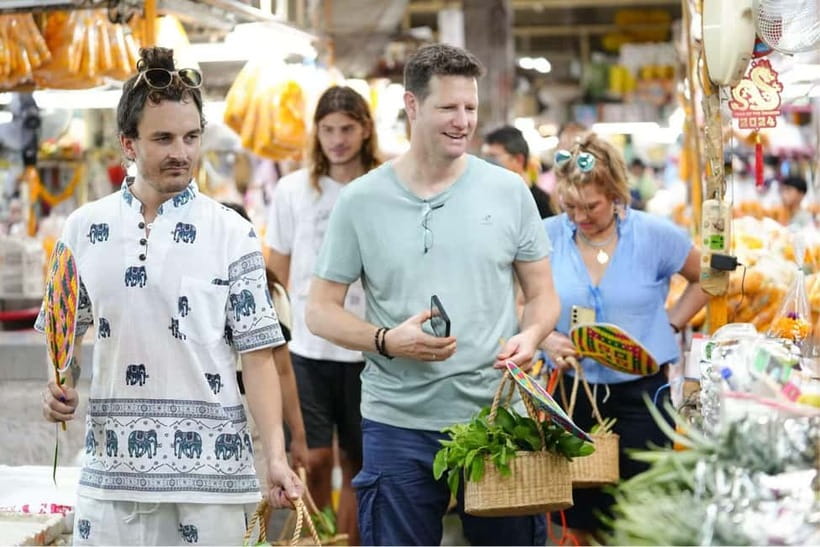
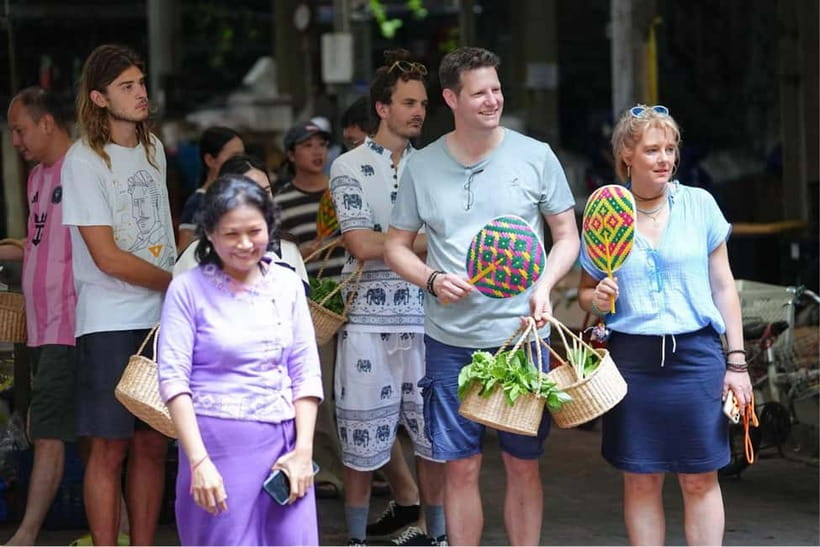
Your guide leads you through local wholesale fruit and vegetable markets and the flower market. Here, Thai cooking becomes easier to understand: you can see the ingredients in the setting where they’re sold, handle them, smell them, and, when invited, taste them. The instructor can explain how ingredients are used and what to look for when choosing them.
That context is especially useful if you’ve eaten Thai food but have never shopped for its ingredients. A recipe may name a particular herb or vegetable, but seeing and smelling it gives you a better sense of what it contributes. You’ll also meet local vendors along the way, adding a human touch to what could otherwise be a list of unfamiliar ingredients.
The flower market adds another angle to the visit. Thai flowers are part of the class’s food culture, and the tour provides a chance to learn about them along with the produce. Don’t expect a long, separate lecture on every stall: this is a short guided walk that leads into a cooking class. Its value is in having someone point out details you might otherwise pass without understanding.
Four Thai dishes, made by your own hands
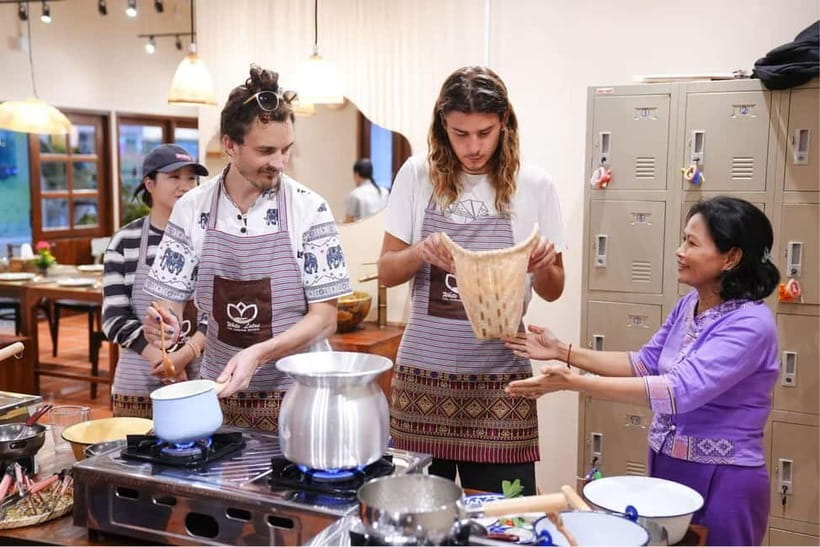
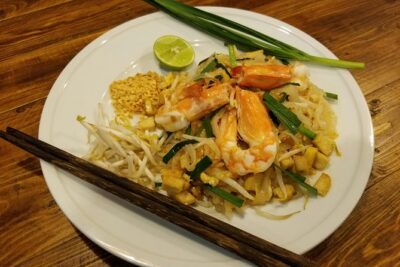
Back at the school, you’ll prepare four dishes: Tom Yam Goong, Pad Thai, Som Tam, and Mango Sticky Rice. Together, they cover a satisfying spread of Thai flavors: soup, noodles, salad, and dessert. You don’t simply watch an instructor cook. You get hands-on practice, with the teacher explaining each step and helping the group as it works.
That difference matters. A demonstration can leave you with a pleasant meal and a few photos, but it may not show you how to reproduce the food at home. Here, you take part in the cooking and leave with recipes, so you have something to refer to when you try the dishes again.
The four-course menu also makes this a substantial meal. You cook and eat the food as the class progresses, rather than waiting until the end to sit down to one plate. Come hungry is sensible advice, especially if you’ve eaten recently or planned a large lunch. The food you make is the meal, so there’s no need to think of this as a light snack between sightseeing stops.
The class suits all skill levels. If you rarely cook, the instructor explains the process and keeps the work accessible. If you already know your way around a kitchen, you still get the market visit, Thai ingredients, and the chance to make recipes you may not have tried before. The emphasis is on participating and learning, not on showing off culinary skills.
Spice level can be adjusted, which is useful if you enjoy Thai flavors but don’t want every dish at maximum heat. Vegetarian options have also been offered, and some classes have provided a choice of shrimp, chicken, or vegetarian versions. If you have dietary needs, check what can be accommodated when booking rather than assuming every dish can be changed in every session.
More market tours around Bangkok:
- Bangkok: Damnoen Saduak Market and Maeklong Railway Market
★ 4.5 · 26,723 reviews - The Old Siam: Damnoen Saduak and Maeklong Railway Market
★ 4.5 · 10,992 reviews - Bangkok: Train Market & Floating Market with Boat Ride
★ 4.7 · 9,547 reviews
Fresh coconut milk makes dessert part of the lesson
Mango Sticky Rice is a familiar Thai dessert, but this class gives you a step beyond simply assembling it. You’ll learn to make fresh coconut milk from scratch for the sticky rice. It’s a small detail with real value: you see another part of the cooking process that is easy to take for granted when ordering the finished dish.
The dessert also gives the class a sweet finish after the soup, noodles, and salad. Since you prepare and eat each dish, the cooking builds into a meal rather than leaving you to wonder what happens to the food afterward. If you’re a dessert fan, the coconut milk lesson may be one of the most memorable parts of the session.
The broader point is that the class is built around food you can connect to both the market and the table. You’re not only collecting recipes. You learn about ingredients on the walk, then use them in dishes while an instructor talks you through the steps. That link gives the experience more depth than a kitchen-only lesson.
A small-group feel without a formal classroom mood
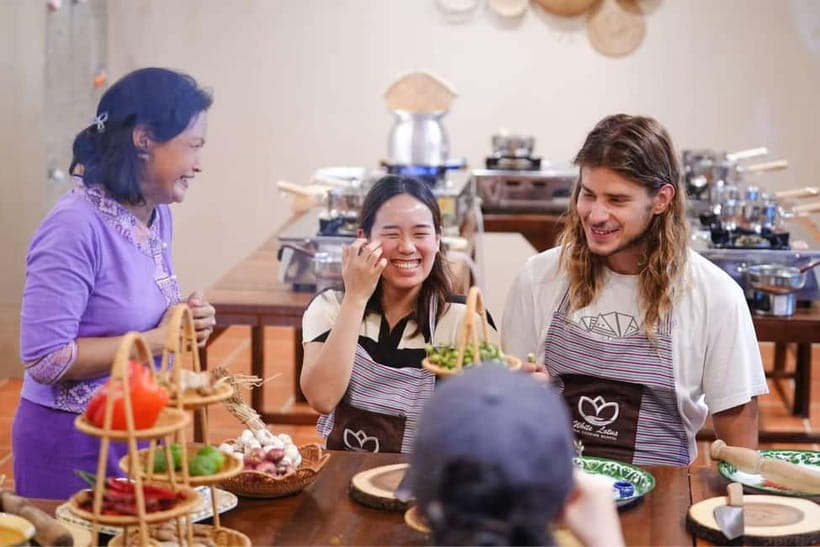
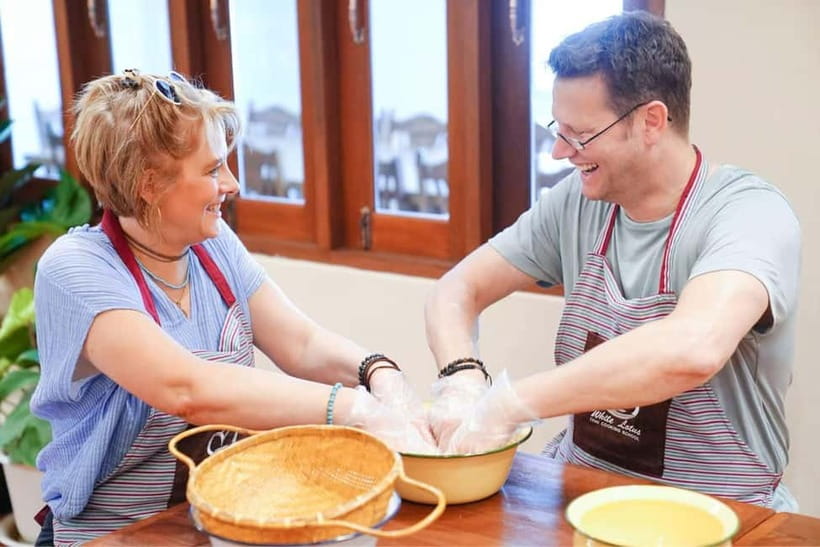
The school is described as clean, well-equipped, and set up in a cozy, home-like style. The atmosphere is meant to be friendly rather than formal, and the shared meal gives you time to talk with people from other places. One class has been described as a group of around ten, which suggests a social setting where you can cook alongside others without being part of a large tour crowd. Group size may differ by session.
The instructors are a central part of the experience. Names that have been associated with the school include Jeab, Sasi, Chon, Pat, and Blue Jay. The individual teacher depends on the class, but the teaching style described by participants is clear and patient, with explanations in English and a sense of humor. The instructors also bring cultural context into the lesson, not just instructions for each recipe.
At the end, there’s a lucky draw, a short lesson in folding a white lotus, and a certificate to take home. These are small finishing touches, not the main reason to book, but they suit the class’s mix of food, culture, and group fun. You also receive recipes, so the practical souvenir is more than a certificate.
Is $35 good value for three and a half hours?
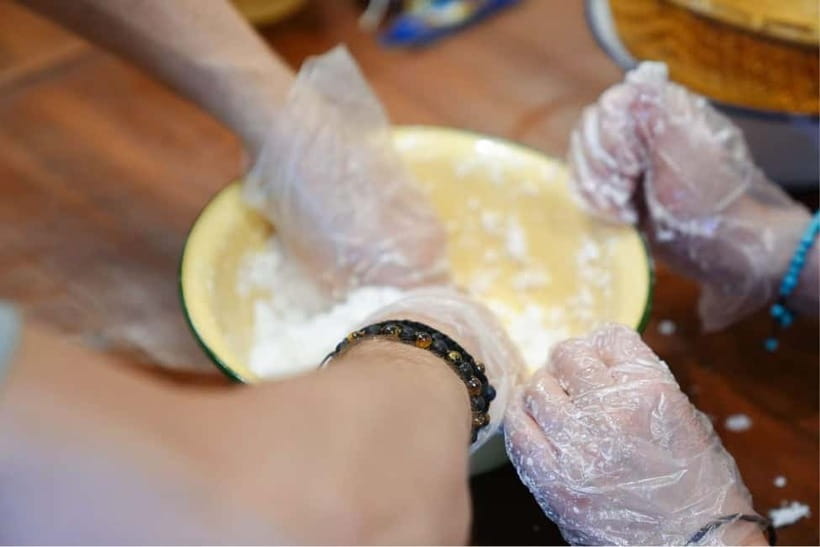
At $35 per person, the class bundles a guided market walk, a flower market visit, hands-on instruction, four dishes, fresh coconut milk preparation, and a meal. That is good value if you want an activity that fills a substantial part of the day and gives you more than a restaurant meal. The price is easier to justify if you’re curious about Thai cooking and expect to use the recipes afterward.
It’s less compelling if your only goal is to eat cheaply or if you would rather spend the time independently exploring markets. The class charges for interpretation and participation, not simply access to the food stalls. If you already know Thai ingredients well and have little interest in cooking, you may get less from that part of the program.
Keep the transport cost in mind. The school is close to Sanamchai MRT, but getting there is your responsibility. Once you arrive, the itinerary is organized around the nearby markets and cooking school, with no extra transportation included.
You can reserve now and pay later, and cancellation up to 24 hours in advance is available for a full refund. The activity is wheelchair accessible. Children under six are not considered suitable, though families with older children have taken part. If you’re traveling with children, consider whether they’ll enjoy a long, hands-on session and a meal built around several dishes.
More cooking classes around Bangkok:
- Bangkok: Hands-on Thai Cooking Class and Market Tour
★ 4.9 · 1,614 reviews - Bangkok: Tingly Thai Cooking School Half-Day Cooking Class
★ 4.9 · 1,191 reviews - Bangkok: Maliwan Thai Cooking Class with Market Tour
★ 4.9 · 1,133 reviews - Hands on Thai Cooking Class and Market Tour
★ 5.0 · 660 reviews
Who should book the White Lotus class?
I’d choose this class if you want to understand Thai food by handling ingredients and cooking a full menu, not just by ordering it at a restaurant. It’s a particularly good fit for first-time visitors who want a guided introduction to market produce, couples or friends looking for a shared activity, and families with children old enough to take part. No cooking background is needed.
The class also suits anyone who likes learning through conversation. The instructor’s explanations connect the market to the dishes, while the shared meal creates a relaxed close to the session. If you’re vegetarian or want mild food, ask about the available options before you book.
Skip it if you have only a short window in Bangkok, don’t want to spend several hours cooking, or would rather avoid a group activity. Otherwise, the mix of market walk, four recipes, and a generous meal makes this a practical way to spend a half-day. Book it if the kitchen sounds as interesting to you as the market. And arrive hungry.
FAQ
How long is the cooking class?
The activity lasts 210 minutes, or 3.5 hours.
What dishes will I cook?
You’ll make Tom Yam Goong, Pad Thai, Som Tam, and Mango Sticky Rice.
Is a market visit included?
Yes. The class includes a visit to local wholesale fruit and vegetable markets and Bangkok’s biggest flower market.
Will I learn to make coconut milk?
Yes. You’ll prepare fresh coconut milk from scratch for the sticky rice.
Where is the meeting point?
Meet at White Lotus Thai Cooking School on the second floor of The Market Organization at Paak Klong Talad.
How close is the school to Sanamchai MRT?
The Market Organization is 150 meters from Sanamchai MRT station.
Is transport included?
No. Transportation to and from the cooking school is not included.
Is the class suitable for beginners?
Yes. It is suitable for all skill levels, and you’ll cook hands-on with an instructor.
Can I choose how spicy my food is?
Yes. The spice level can be adjusted to your preference.
Can children attend?
Children under six are not suitable for the activity.
Just in for Bangkok
- Private Tour to Ayutthaya and Bang Pa In Palace with Boat Tour★ 5.0 · 15 reviews
- Private Tour to Maeklong Railway Market and Floating Market★ 5.0 · 42 reviews
- Private Tour to Ayutthaya, World Heritage Site with Boat Tour★ 5.0 · 55 reviews
- Private Tour – Top 3 Major Monuments (Grand Palace, Wat Pho, Wat Arun)★ 4.5 · 21 reviews
- Private Tour for Ancient City Bangkok and Erawan Museu(min 2 pax)★ 4.5 · 8 reviews
- Private Tour to Ayutthaya, World Heritage Site with Boat Tour★ 5.0 · 39 reviews
- Private Tour: The Dragon River & Land of Sacred Deities Chachoengsao★ 5.0 · 4 reviews
- Private Tour: Temples Tour of Bangkok★ 5.0 · 49 reviews
Bangkok Cooking Classes, compared.
Tingly Thai Cooking School Half-Day Cooking Class
Read our review →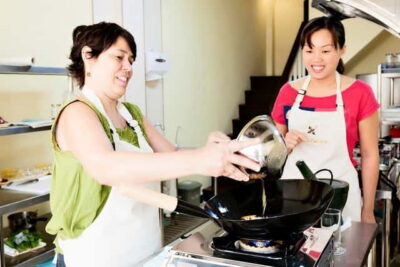
Tingly Thai Cooking Class with Morning Market Tour
Read our review →
Pink Chili – Thai Cooking Class and Market Tour in Bangkok
Read our review →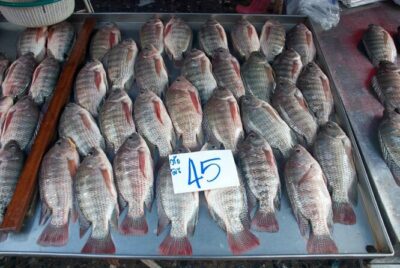
Authentic Thai Cooking with the Largest market visit &TukTuk ride
Read our review →
Browse the lists this tour appears in