
Reviewed · BANGKOK COOKING CLASSES
Bangkok: Hands-on Thai Cooking Class and Market Tour
Thai cooking gets more memorable when you pound curry paste, cook a meal with your own hands, then eat it while it’s still hot. This 210-minute class at House of Taste Thai Cooking School includes four dishes, ingredient instruction, and a clear choice: join the 8:30 a.m. class for a market visit, or choose an afternoon or evening class with mango carving.
I like two things in particular: you make the food yourself rather than watch a chef do it, and the class turns unfamiliar ingredients into practical lessons you can use at home. The small-class format also leaves room for questions, and instructors including Jay, Pitch, and April are praised for patient, easy-to-follow teaching.
One point to weigh: the morning market stop may be modest, not a long tour through a sprawling wet market. If market exploration is your main reason for booking, keep expectations measured; the cooking is the heart of the outing.
At a glance
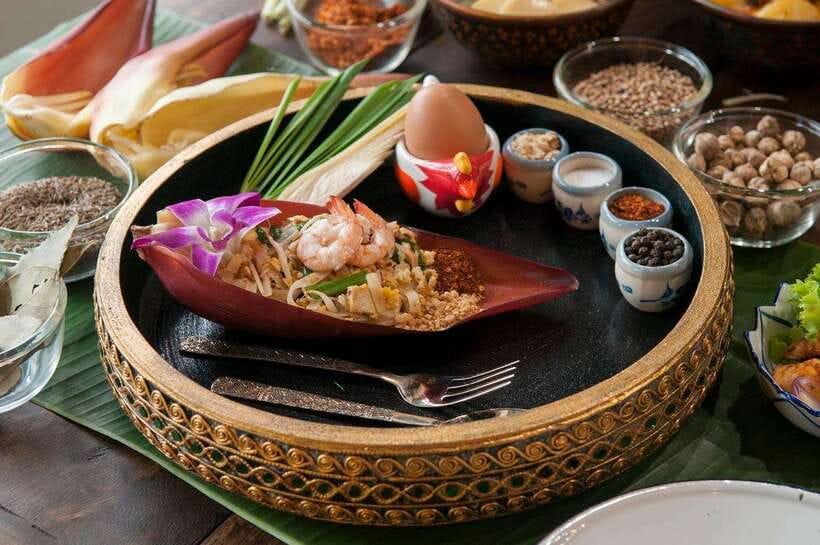
- Four dishes, cooked by you: The daily menu usually includes a soup or salad, a noodle or stir-fry dish, a curry, and mango sticky rice.
- Choose your final activity: Morning classes at 8:30 a.m. include a nearby market visit. Afternoon and evening sessions have mango carving instead.
- Make curry paste from scratch: You’ll learn about Thai herbs, spices, vegetables, rice, and coconut milk as you cook.
- Eat as you go: Each dish is served soon after you make it, so the meal comes in courses rather than as one cooling pile.
- Dietary needs can be accommodated: Vegetarian, halal, kosher, and allergy-related substitutions are available with advance notice. No MSG is used.
- Useful take-home material: Recipes arrive by email, including recipes for dishes beyond the ones you cook in class.
Start at Asoke, then meet the ingredients
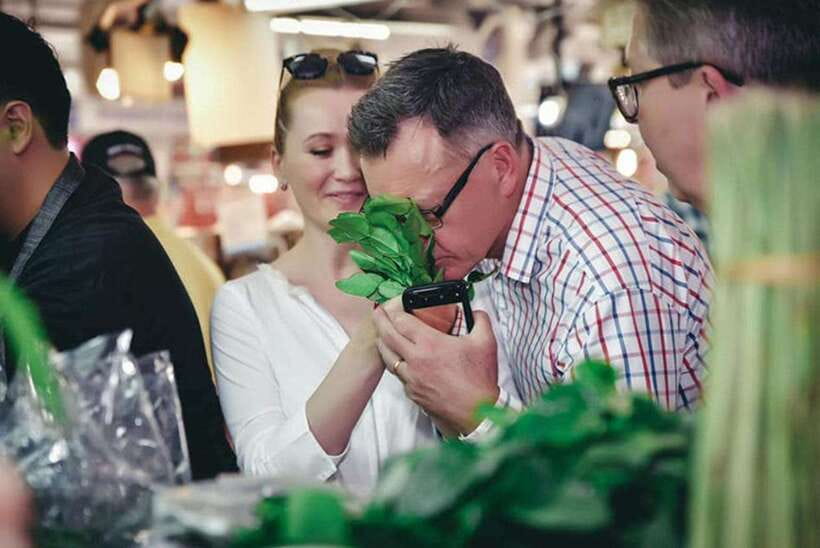
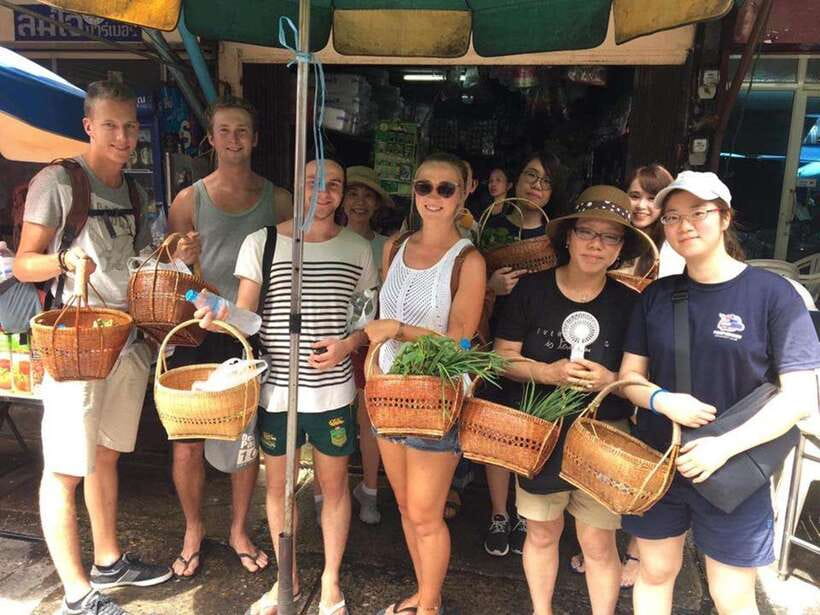
For the morning class, meet at street level near BTS Asoke Exit 3 and MRT Sukhumvit Exit 3. The meeting point can also be found by pinning Hey! Coffee MRT Sukhumvit. From there, the instructor leads the group to a nearby market to look at ingredients used in the cooking session.
That market visit gives the morning class a useful first chapter. Instead of meeting lemongrass, herbs, rice, and spices only as chopped ingredients on a kitchen counter, you get an introduction to what you’ll be handling and cooking. It helps connect the names of ingredients to their appearance and role in Thai food.
Keep your expectations sensible. The stop is described as a nearby market, and the route can be fairly compact, with a few produce stalls and a dry-goods shop rather than a full, sprawling wet market. That shorter visit may suit you if you want context without spending the morning shopping. If you’re hoping for a long market walk, the class itself offers more than the market stop.
The afternoon and evening classes meet at the school in Sukhumvit 4. They skip the market visit and introduce ingredients at the cooking school instead. In its place, mango carving comes at the end, a hands-on activity that adds a decorative skill to the meal. Choose your time based on what you value more: a short look at a local market, or a carving session after cooking.
More market tours around Bangkok:
- Bangkok: Damnoen Saduak Market and Maeklong Railway Market
★ 4.5 · 26,723 reviews - The Old Siam: Damnoen Saduak and Maeklong Railway Market
★ 4.5 · 10,992 reviews - Bangkok: Train Market & Floating Market with Boat Ride
★ 4.7 · 9,547 reviews
Four dishes, with a different menu each day
The class is built around four dishes, prepared over about two hours of cooking. The menu changes by day, so check the schedule before booking if there is a particular dish you especially want to make. Mango sticky rice appears every day, while the other three dishes rotate.
Here is the weekly lineup:
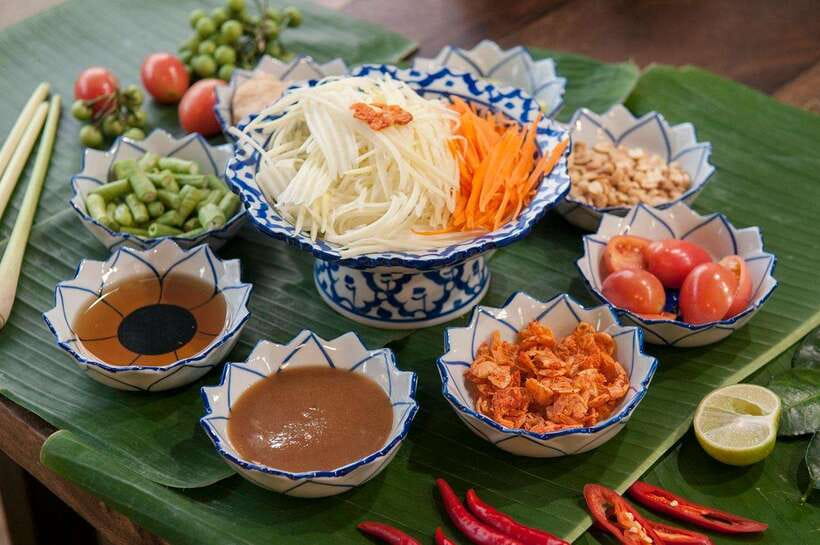
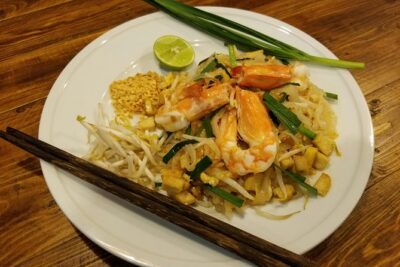
- Monday: Som Tum, or Thai papaya salad; shrimp Pad Thai; green curry with chicken; mango sticky rice.
- Tuesday: Tom Kha Gai, or spicy coconut soup with chicken; Pad Krapow Gai, or Thai basil chicken; red curry with chicken; mango sticky rice.
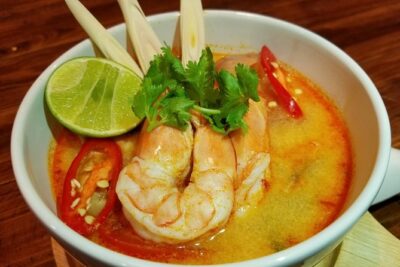
- Wednesday: Tom Yum Goong, or hot and sour soup with shrimp; Pad See Ew, or flat rice noodles with chicken; green curry with chicken; mango sticky rice.
- Thursday: Larb Gai, or spicy minced chicken salad; shrimp Pad Thai; Panang curry with chicken; mango sticky rice.
- Friday: Som Tum; Pad Krapow Gai; red curry with chicken; mango sticky rice.
- Saturday: Tom Kha Gai; shrimp Pad Thai; green curry with chicken; mango sticky rice.
- Sunday: Tom Yum Goong; Pad See Ew; Panang curry with chicken; mango sticky rice.
The rotation gives you a broad taste of familiar Thai dishes without asking you to cook every recipe in one session. You might make a soup, a noodle dish, and a curry, then finish with dessert. The balance changes by day, so a quick menu check can help you pick between, for example, Pad Thai and Pad See Ew, or between green, red, and Panang curry.
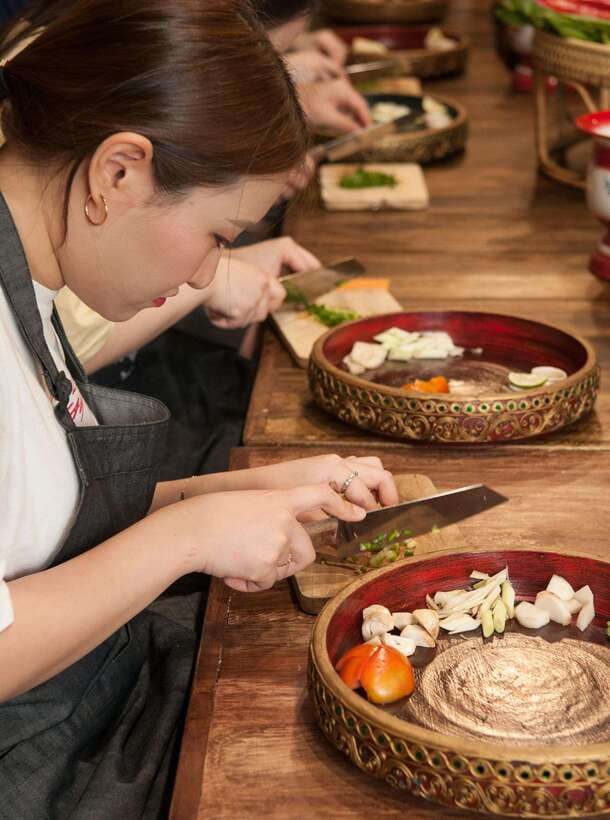
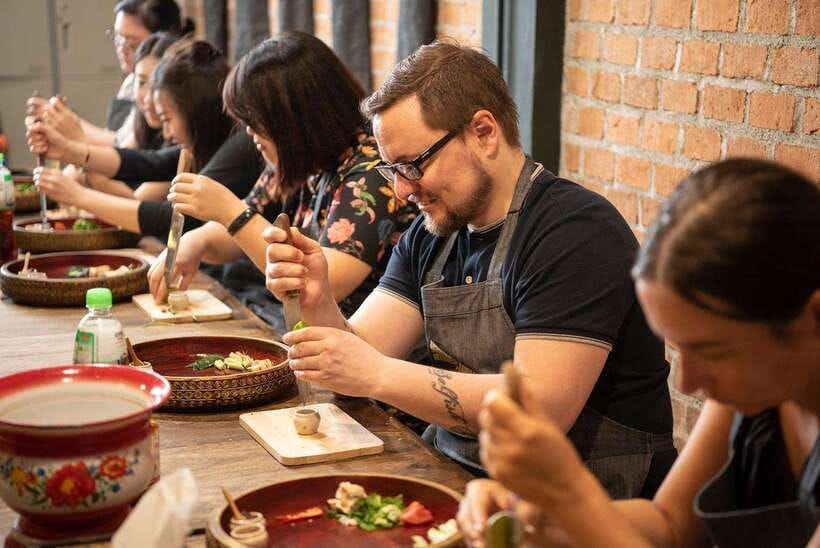
This isn’t a demonstration where you watch a teacher do all the work. You handle the ingredients and follow the cooking steps yourself, with help from the instructor and staff. That’s useful if you’re a beginner: you can see how the components come together while having someone nearby when a step is unclear. The instructors are described as clear and patient, and the pace is intended to work for different skill levels.
Curry paste, coconut milk, and the value of doing it yourself
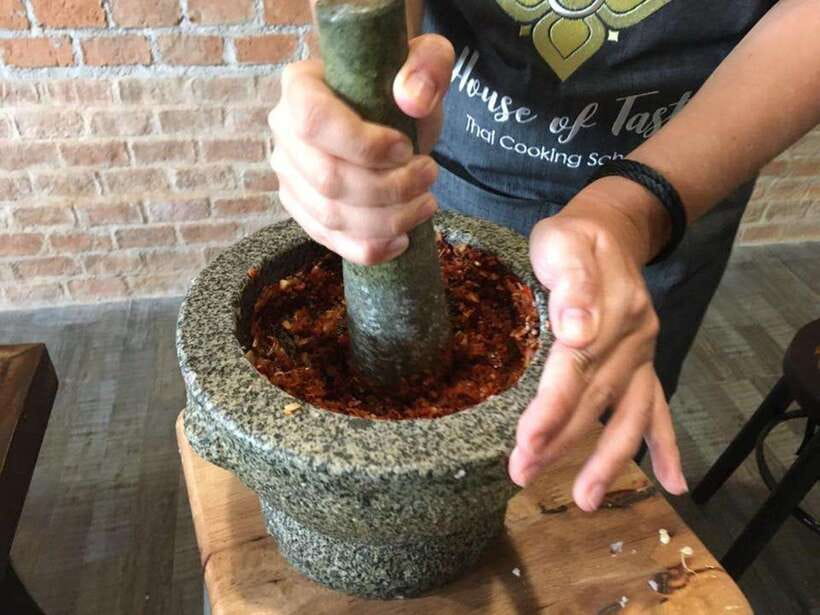
Making curry paste from scratch is one of the most practical parts of the class. Thai curries can seem mysterious when they arrive at a restaurant table, but working through the paste-making process gives you a better sense of what goes into the dish. You’ll also learn about herbs and spices, vegetables, rice, and the preparation of coconut milk.
The lesson is not only about following a recipe. It introduces ingredients as working parts of a meal, which makes it easier to understand what you’re doing when you try the recipes again. You won’t leave with every nuance of Thai cooking mastered in a few hours, but you will have a set of dishes and steps to practice.
One appealing detail: you make each dish for yourself, and it is served while fresh. That means the class doubles as a substantial meal. Come hungry, especially if you’re planning to eat soon afterward. Water is included; alcoholic drinks are not, though they are available to purchase.
A small class, with room to ask questions
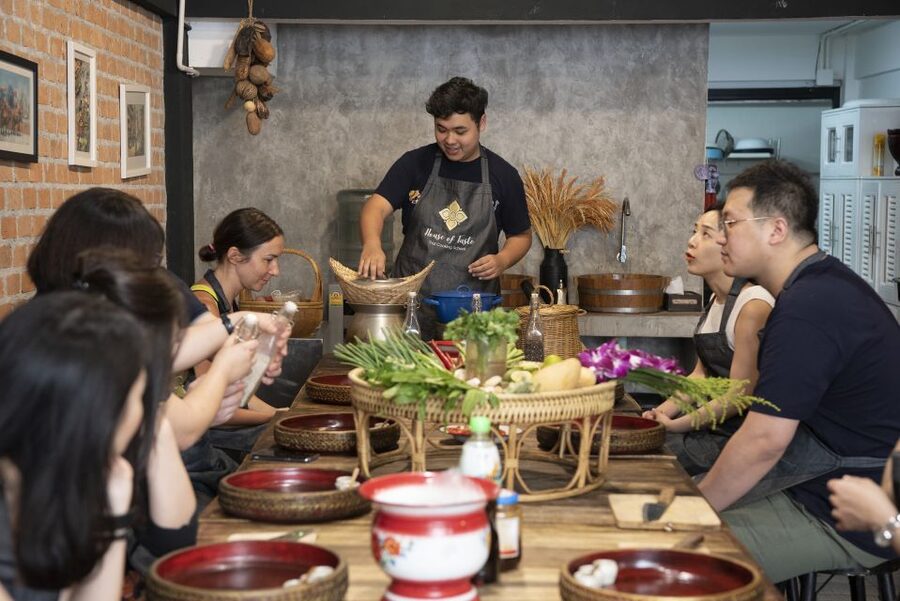
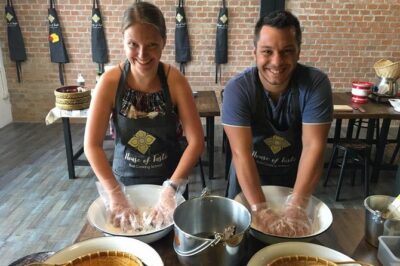
The class is designed to be hands-on and personal rather than a large-scale demonstration. The school describes it as a small class, and some sessions may be especially intimate when few people have booked. That format can make a real difference if you’re new to cooking or want to ask about ingredients, substitutions, or technique.
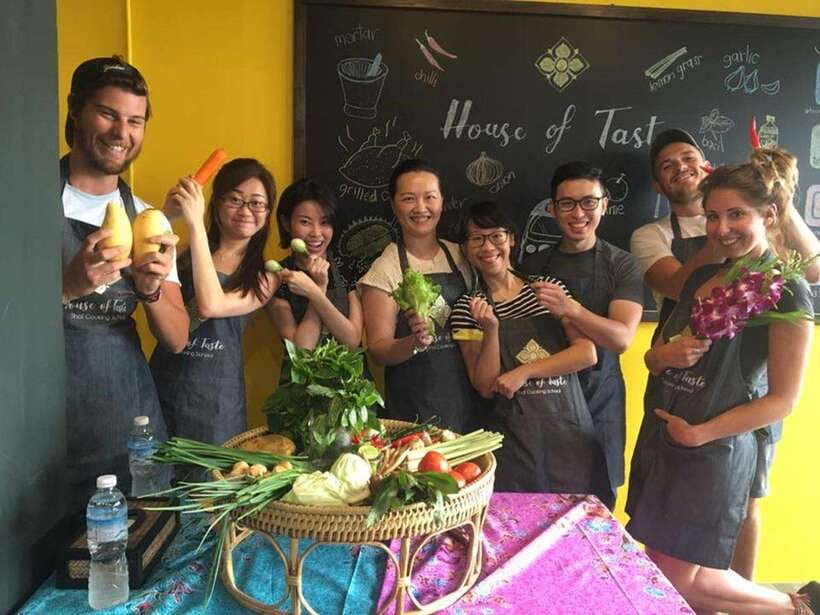
Instructors named by participants include Jay, Pitch, April, Jane, Jen, Tony, and others. You may not have a particular instructor, so don’t book on the assumption that one named teacher will lead your session. What matters more is the teaching style: the class is set up for clear explanations and individual assistance, and the instructors are repeatedly praised for being friendly and patient.
The class also has a social side. You cook alongside people from different places, then share the meal as you finish each dish. You can focus on the food, but there’s also room for conversation while you work. That makes this a good fit if you want a structured activity with a bit of company, rather than a private lesson.
More cooking classes around Bangkok:
- Bangkok: Tingly Thai Cooking School Half-Day Cooking Class
★ 4.9 · 1,191 reviews - Bangkok: Maliwan Thai Cooking Class with Market Tour
★ 4.9 · 1,133 reviews - Hands on Thai Cooking Class and Market Tour
★ 5.0 · 660 reviews - Tingly Thai Cooking Class with Morning Market Tour
★ 5.0 · 589 reviews
Mango carving for afternoon and evening sessions
If you choose an afternoon or evening class, mango carving replaces the market visit. It takes place as the last class activity, after the cooking and food introduction at the school. The carving adds a playful finish, and it gives you something different to do after the main task of making the meal.
The change is worth noting when comparing time slots. The morning session offers a short market visit but no mango carving; later classes offer carving but no market tour. Neither is the obvious winner for everyone. Choose the morning if seeing ingredients in a market setting matters to you. Choose later if you’d rather stay at the school and try the carving activity.
Mango sticky rice is part of the daily menu regardless of time. The afternoon or evening carving is an extra activity, not a replacement for the dessert you cook and eat.
Dietary requests and practical details
The school can provide substitutes for vegetarian, halal, and kosher diets, as well as for allergies, but you should give advance notice. If you have a specific dietary requirement, explain it before the class rather than assuming it can be handled on the spot. No MSG is used in the cooking.
The activity lasts 210 minutes, and English and Thai are the listed teaching languages. Comfortable walking shoes are recommended, particularly for the morning market visit. A personal locker is included, along with ingredients, cooking equipment, drinking water, and recipes sent by email.
The booking terms add flexibility: you can reserve now and pay later, and cancellation up to 24 hours in advance qualifies for a full refund. Those details are helpful if your Bangkok plans are still shifting, though the main decision is simpler: pick the time slot that best matches your interest in the market or mango carving.
Is $45 good value?
At $45 per person, you’re paying for more than a meal. The fee covers a 3.5-hour cooking class, an instructor, all ingredients and equipment, four dishes, drinking water, a locker, and recipes by email. The morning session also includes the market visit; afternoon and evening sessions include mango carving.
The strongest value is the combination of cooking and eating. You leave with a full meal, an introduction to ingredients, and recipes you can use later. It’s also more participatory than simply eating at a restaurant, and the hands-on format makes the price easier to justify if you enjoy food or want a practical activity in Bangkok.
It may be less compelling if you only want an extensive market tour or a quick lunch. The market component is limited, and the session takes three and a half hours. But if you want to learn a few Thai dishes in a supportive setting, the price is reasonable for the amount of instruction and food included.
Who should book this class?
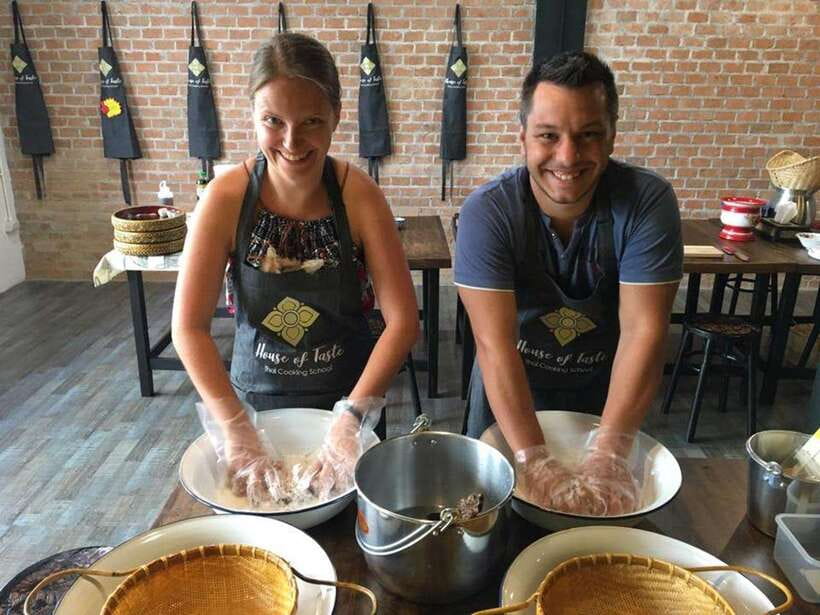
I’d recommend it to curious eaters, first-time cooks, couples, families, and anyone who wants a useful break from sightseeing. You don’t need cooking experience to join, and the menu offers a good spread of Thai staples. It can also suit vegetarians and people with some dietary restrictions, provided the school gets advance notice and confirms suitable substitutions.
Book the morning class if the market visit is important to you, but go in expecting a short ingredient-focused stop rather than a major market excursion. Book an afternoon or evening class if mango carving sounds more appealing, or if meeting at the school in Sukhumvit 4 suits your plans better.
If your schedule allows only one food activity in Bangkok, this one has a strong case: you learn, cook, and eat in the same session. Just check the day’s menu, communicate dietary needs early, and arrive ready for a generous meal.
FAQ
How long is the cooking class?
The activity lasts 210 minutes, or three and a half hours. About two hours are spent making the four dishes.
Which class includes the market visit?
Only the 8:30 a.m. morning class includes the market visit. It begins at street level near BTS Asoke Exit 3 and MRT Sukhumvit Exit 3.
What happens in the afternoon and evening classes instead?
Afternoon and evening classes do not include a market tour. They include an introduction to ingredients at the school in Sukhumvit 4 and a mango carving activity at the end.
How many dishes will I make?
You make four dishes, with the menu changing by day. Mango sticky rice is included every day.
Can the school accommodate dietary requirements?
Vegetarian, halal, and kosher options, along with allergy-related substitutions, can be arranged with advance notice. No MSG is used.
What is included in the price?
The price includes the cooking class and instructor, four-course meal, ingredients and equipment, drinking water, a personal locker, and recipes by email. The market tour is included only in the morning class, while mango carving is included only in afternoon and evening classes. Alcoholic drinks are available for purchase but are not included.
Just in for Bangkok
- Private Tour to Ayutthaya and Bang Pa In Palace with Boat Tour★ 5.0 · 15 reviews
- Private Tour to Maeklong Railway Market and Floating Market★ 5.0 · 42 reviews
- Private Tour to Ayutthaya, World Heritage Site with Boat Tour★ 5.0 · 55 reviews
- Private Tour – Top 3 Major Monuments (Grand Palace, Wat Pho, Wat Arun)★ 4.5 · 21 reviews
- Private Tour for Ancient City Bangkok and Erawan Museu(min 2 pax)★ 4.5 · 8 reviews
- Private Tour: The Dragon River & Land of Sacred Deities Chachoengsao★ 5.0 · 4 reviews
- Private Tour to Ayutthaya, World Heritage Site with Boat Tour★ 5.0 · 39 reviews
- Private Tour: Temples Tour of Bangkok★ 5.0 · 49 reviews
Bangkok Cooking Classes, compared.
Tingly Thai Cooking School Half-Day Cooking Class
Read our review →
Tingly Thai Cooking Class with Morning Market Tour
Read our review →
Pink Chili – Thai Cooking Class and Market Tour in Bangkok
Read our review →
Authentic Thai Cooking with the Largest market visit &TukTuk ride
Read our review →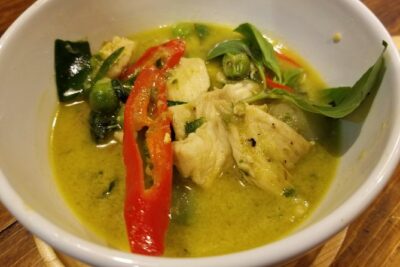
Browse the lists this tour appears in